Agenda 21 Is Finally on the National Radar

A couple of years ago when Tea Parties and other conservative groups started warning about dangerous socialist influences infiltrating our local governments, I was a skeptic.  “I’m not a conspiracy theorist,” I thought.  “Agenda 21?  Sounds like Area 51.  That stuff is just too crazy to even my waste time thinking about.  I’m a realist, I’m worried about the economy and the national debt.  Don’t bother me with the fringe nutball stuff.”

The Agenda 21 story was never picked up by the mainstream media, but it seemed there were more and more news items about “sustainable” growth initiatives, and bike lanes, and expensive projects with marginal (if any) apparent benefits. A common theme was the proliferation of grants – “free” money from the federal government, usually involving NGOs (non-governmental agencies).  Although the money always comes with strings attached, it seems irresistible to cash-starved city and county departments.

When people I know and trust began rolling up their sleeves, standing up to their city councils and county commissions, and loudly “outing” the socialist agendas and harmful effects of these initiatives, I had to start paying attention.  If you have read this far and don’t know what Agenda 21 is, or why you should be concerned, it’s time for you to start paying attention, too.  You can start with the Wikipedia entry.  Probably the deepest research on the origins and dangers of Agenda 21 was done by investigators working for Glenn Beck.

According to Brushfires of Freedom Montana, a conservative and constitutional watchdog group, “There are literally thousands of Agenda 21 projects going on in Montana.”   New initiatives pop up almost daily all over the state and some are undoubtedly worming their way into your local governments – just look for the word “sustainable” and follow the grant money.

I was surprised to see this morning that Reuters published a feature story about Agenda 21 and it hit the other mainstream news sources.  While far from a definitive piece, just the appearance of Agenda 21 on the national radar screen is big news.

I’ll tell you what is definitely NOT sustainable – our government’s insatiable spending and the exploding national debt – and I will stay focused on that.  But at the risk of being labeled a “nutball conspiracy theorist”, I will stand with my conservative brethren and the state legislatures that have taken a stand.  Agenda 21 is a threat to our personal liberties that must be faced down.  It can’t be a secret any more.

Tom Balek – Rockin’ On the Right Side

Mmm mmm
Something’s comin’ over, mmm mmm
Something’s comin’ over me
My baby’s got a secret

Secret – Madonna

Absentee Ballots – Invitation To Voter Fraud

There are so many things going haywire in our nation that you just can’t keep up with them all.

It’s like whack-a-mole.   “Federal Land Grabs!”  Bam!  “Agenda 21!”  Bam!   “Election Fraud!”   Bam! Bam! Bam!  You can’t keep up – when you try to smack down one issue, two or three more pop up.

Yesterday a friend and I made a trip to our County Courthouse to meet the Clerk and Recorder and learn all about our old ES&S 570 tabulator (vote counting machine).  We wanted to know exactly how this thing works and if there are any weaknesses or opportunities for hanky-panky.  We were warmly greeted and our Clerk went out of her way to answer all of our questions.  She even took time out of her busy day to give us a test drive.

The machine is a pretty clunky old gal, but understandable and serviceable.  There are opportunities for people error, but the machine itself is pretty fool-proof as near as we could tell.  However, our visit actually pointed us to an unexpected and much bigger problem – absentee ballots.

Our secretary of state, Linda McCulloch, insists “voter fraud is nonexistent in Montana“.   If your local fire chief tells you “fires are nonexistent in my town”, you’d better start looking for a new fire chief.   He not only may not see fires that do occur, he also doesn’t feel the need to prevent them.  Great gig if you can get it.

The fact is, our absentee ballot system is a neon-flashing, irresistible invitation to any unscrupulous group wanting to control an election.  Here’s why:

Every voting jurisdiction in Montana, and in most states, mails absentee ballots to out-of-state addresses.  Many are sent to people who previously lived in the district.  Some are college students who originally registered using their parents’ address.  In any event, if someone is registered to vote in the district, all they have to do is request an absentee ballot, fill it out and sign it, and return it to the county clerk.  As long as they keep voting, they remain registered at the last address on file and can continue voting forever, regardless of where their ballot is sent.  They never have to set foot in the state.

I asked our clerk if they check to see if these out-of-state absentee voters are also registered to vote in other states.  “No,” was the succinct reply.

How many votes in Montana elections are being placed by people who no longer live here?  Or perhaps never did?  How easy would it be for me to register to vote in Montana, using a fictitious name and/or address, and then ask for an absentee ballot to be sent to me in Newark, New Jersey?  Using technology, why couldn’t I do this a thousand times or more?

It may sound like too much work for an amateur like you or me for just one vote.  But elections are no longer just about choosing the right person for a local government office.  There are huge government dollars at stake and deep pocket special-interest groups who will do and spend whatever it takes to throw an important election – think, for instance, Al Franken.  And what’s the down-side if you get caught?

The only verification of absentee voters is a brief check of the signature on the envelope against the scanned signature on the registration at the secretary of state’s website.  In our courthouse, whoever gets the mail performs this function.  It is unsupervised and unscientific at best (I watched a small batch being checked-in and saw a very suspicious signature accepted.)  I know there are many conscientious employees in our county offices, but if it’s a busy day, especially in a very large district, is this a step that might get skipped?  Following up on a suspicious signature is tedious and time-consuming.  Who would know the difference?

We all love the convenience of absentee voting, and its use is exploding all over the country.  I maintain that vote fraud will explode right along with it unless we take one or two preventative steps:

  • stop mailing absentee ballots out of state
  • develop a nationwide registration system and cross-check registrations, similar to that built by True The Vote, a national voter integrity advocate group

I know my libertarian friends oppose national ID cards and related identification processes such as fingerprint and retina imaging, but this would be yet another perfect justification for their use.

This is not an indictment of our County Clerks and their employees.  In our sparsely-populated, rural state, there is probably less election fraud than in populous areas.   In larger cities, where ballots are handled in huge batches and nobody knows anybody else, and where votes are worth big money, it looks like easy money.

Tom Balek – Rockin’ On the Right Side

This video of the Who in 2001 includes
bassist John Entwistle just before his death, and
Zak Starkey (Ringo’s son) on the drums –
sure looks like his Dad, but plays even better!

Who are you?
Who, who, who, who?

Who Are You – the Who

Did Your School Tell You About Common Core Standards?

Common Core State Standards – the biggest change in K-12 education in generations.  It’s coming soon to a school near you (or may be there already).  Have you heard about it?  Do you have any idea what it is?  Did anybody ask you if you approve?  Do your legislators know about it?

Whenever there is a big change in government, and it is kept essentially secret from the public, I get a hinky feeling.  The adoption of the Common Core State Standards (CCSS) will have a profound impact on students, teachers, schools, and parents/taxpayers.   Yet it is flying ‘under the radar’, virtually unmentioned by the schools, the media, or anyone else.

According to the Core Standards website, “The standards were developed in collaboration with teachers, school administrators, and experts, to provide a clear and consistent framework to prepare our children for college and the workforce.”  It lays out new instructional methods aimed at making educational outcomes more consistent across the nation and more competitive with other countries.

I have found fairly extensive detail on the web about the proposed changes in teaching methods.  The aim is to start students with a strong foundation of basic skills, and then build knowledge empirically, with a focus on college and career readiness and applied technology.  The approach to education will be more technical, with built-in measurement against standards.  Lofty and worthwhile goals, indeed.

While there seems to have been much work and planning done on methods and measurement, there is one huge component missing in the CCSS framework:  Content.

Under CCSS, the approach to education will evolve from the traditional “What will students learn?” to “How will students learn?”  It makes sense to teach a child how to read well before expecting him to gain knowledge from a text.

I have many questions and concerns about Common Core.  Among them: Will schools cut down on non-academic fluff and social engineering to provide the additional time required?  If the process requires building on a foundation, how can it be implemented by “starting in the middle”?  If it relies on integrating skill-building between subjects, why are only language arts and math on the front burner?  How will CCSS be funded and what will it cost?  These are just for starters.

Perhaps most importantly:  How will local school districts and parents maintain control over curricular content?

CCSS will require new texts and classroom materials.  Because the implementation schedule is so aggressive, choices will be slim.  This creates a windfall profit opportunity for the authors and publishers of the first CCSS-ready texts.  Why do I have the nagging suspicion that the ‘winners’ have already been chosen?   Why do I worry that the few scarce, expensive CCSS-ready texts will be infused with politically-motivated ideology (even more so than current texts)?  

Why is the Common Core State Standards initiative such a big secret?  I want to know a lot more about the CCSS before I will feel good about taking the plunge.

Call me jaded.

Tom Balek – Rockin’ On the Right Side

Your thinking’s so complicated
Yeah, I’m so jaded

Jaded – Aerosmith

See a related post about Common Core Standards by Barbara Rush

Corruption in Small Town Montana

We tend to think corruption happens somewhere else.  Chicago maybe.  Surely not in rural Montana.

It hurts to admit that our beautiful state is just as vulnerable to government corruption and election fraud as anywhere else.  Maybe more so, because rural people are often trusting souls.

The recent release of Lynn Rosenberg from prison resurrects the story of the “Wheatland 6” and the ugly corruption scandal that enveloped the community of Harlowton a few years ago.

The story got more national attention than local.  If you are one of the many who missed it, here’s a Cliffs Notes version of the sordid tale.

In January of 2008, Lynn Rosenberg was sentenced to 54 months in prison for the theft of over $194,000 in taxpayer funds (the actual amount embezzled was probably greater) and aggravated identity theft.  Mrs. Rosenberg ran the Office of Public Assistance in Wheatland County, a one-person department in the small town of Harlowton.

The drama began when authorities learned that for years she had been creating fake welfare client accounts, mostly using identities of former Wheatland County residents who had moved away long ago.  She set up bank accounts and post office boxes to receive welfare checks, food stamps, and EBT cards (electronic benefit cards), forging endorsements on the checks and draining the cards at Wal-Mart.  The scheme finally blew up when an anti-theft federal computer program cross-matched one of her welfare “clients” as a truck driver in Oregon who had been earning $80k per year since 2003, and hadn’t received benefits since he lived in Wheatland County in 1991.

For years, Mrs. Rosenberg was on a taxpayer-funded spending spree, aided by many people who had to have known, or at least suspected, that something was amiss.  So why didn’t anybody “blow the whistle” sooner?

One possible reason: her husband, Jim Rosenberg, was – and still is – the county sheriff, a powerful local figure clearly able to ruin your day if you are a local resident.

In November of 2010 a group of concerned Wheatland County citizens, who came to be known as “the Wheatland 6”, were incredulous that Sheriff Rosenberg was running for re-election as if nothing had happened.  His wife had admitted serious embezzlement from the taxpayers.  “If he knew about it, he is corrupt.  And if he didn’t know, he is incompetent.  Either way, we want him out,” the Wheatland 6 said.

The group met with the Montana Dept. of Justice to determine if the DOJ had investigated whether the Sheriff was complicit in the embezzlement scheme.  The response from the DOJ was to refer them to federal authorities, who had requested jurisdiction in the case, calling prosecution at the federal level a “cakewalk”.

The Wheatland 6 mounted a primary campaign to battle Sheriff Rosenberg’s re-election.  To their amazement, the Sheriff had some local support, but their relentless efforts to educate local voters began to get traction, and in the days approaching the primary they were confident the voters would reject a sheriff whose wife is a convicted felon serving time.

Two citizens who were later aligned with the Wheatland 6 were election judges, working in the voter area at the polling station on election day.  They watched and noted many inappropriate and disallowed practices, such as vote counters (who should be sequestered) wandering around the voting area and conversing with election judges and voters, discussing the counts, and making and receiving phone calls during the process.  They witnessed “chaotic” conditions in the counting room, as officials allowed lists and ballots to be strewn around the room, with little or no oversight of the reading and counting of votes.

Feeling insecure as novice election judges, they did not question other, more experienced election officials about these improprieties during the polling.  But they were so alarmed at what they saw, they sought out the County Clerk immediately after the polls closed.  Based on their observations, the County Clerk agreed that there should be a recount, and said she would look into it.  When she failed to follow through on her promise, the citizens began the process of seeking an official recount, escalating their request to the Commissioner of Political Practices and the Secretary of State.

After initially encouraging the Wheatland 6 to pursue a recount, support from the Secretary of State’s office soon waned, leaving their fate in the hands of the county commissioners.  At the next commission meeting, the commissioners refused to hear any testimony, approved the canvass, sealed Rosenberg’s primary win, and summarily ruled against recount.  Their response to the upset citizens was, “If you don’t like our decision, sue us.”

Life goes on in Wheatland County.  Jim Rosenberg won the general election and is still the sheriff.  His wife again lives in Harlowton, having completed her prison sentence.

And the Wheatland 6 still wonder who they can trust.

Tom Balek – Rockin’ On the Right Side

Nobody rocks it like Steve Miller –

You know he know just exactly,
What the facts is.
He ain’t gonna let those two escape justice,
He makes his livin’ off of the people’s taxes.
Go on, take the money and run!

Welch Photo: Jr. High Kids in Charge at KFBB?

HOW CHILDISH!

This week KFBB News in Great Falls ran an item about the Montana Superintendent of Public Instruction race, opening with a nice video of incumbent Democrat Denise Juneau addressing her adoring supporters, and featuring pretty children holding “Juneau” signs.

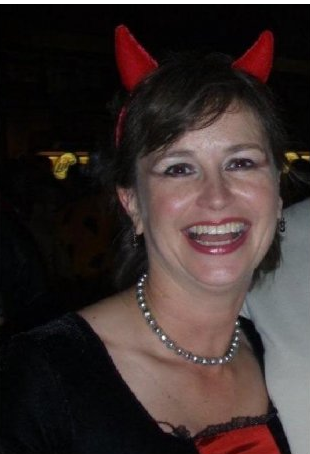
The news producer then had to put a graphic on the screen to represent the challenger, Republican Sandy Welch.  So what image did the station select?  An obscure Facebook photo from a Halloween party showing Welch dressed up as a devil.  Really!

What on earth were they thinking?   A 10-second Google search reveals dozens of appropriate and official photographs of Ms. Welch, and her well-oiled campaign staff is loaded with PR materials immediately available on request, so this was no accident.  Obviously KFBB has no reservations about revealing their political persuasions to the world.

Welch’s campaign has enjoyed big momentum recently,  having won the endorsement of State Senator Jonathan Windy Boy.   Windy Boy said, “Denise Juneau doesn’t understand how to solve the problems our schools are facing. Juneau increases mandates and creates new programs with great media campaigns. Mandates don’t help kids. After hearing Juneau debate, it’s clear that she isn’t focused on increasing school performance. ”

Windy Boy’s endorsement was reassuring to me as an indicator that clear-thinking Native Americans in Montana don’t vote strictly by color (see my post about that).  And, despite Juneau’s insulting contention, I’ll bet they love their kids enough to feed them (see my post about that).

Sandy Welch is probably enjoying a good laugh, and KFBB will doubtless wither in their embarrassment over this juvenile episode. Maybe it was “bring your child to work day” and the producer’s junior high kid was calling the shots.  Or perhaps the producer is bucking for a promotion to the big time – shameless Democrat shill MSNBC.

By the way, I think Sandy Welch is a pretty cute little devil!

Tom Balek – Rockin’ On the Right Side

She’s just a devil woman,
With evil on her mind.
Beware the devil woman,
She’s gonna get you from behind!

Devil Woman – Cliff Richards

Another Report – Montana Parents Don’t Feed Their Kids

A few weeks ago I poked fun at Montana State Superintendent of Schools Denise Juneau when she gleefully reported to the DNC that in Montana “sometimes school is the only place where our kids can get a hot meal and a warm hug.”

Aside from being a direct insult to Montana parents, I thought it was just hyped-up rhetoric for the victim-worshippers assembled at the convention.  But maybe I was wrong.

Now the president of the Montana Rural Education Association, Tim Tharp, has made the same claim.  On “Voices of Montana” with radio host Aaron Flint, Tharp also described “students who come from homes where they don’t always get a good breakfast or have a lot of good food waiting for them when they get home.  We have a lot of kids in poverty across Montana.  They get 10 good meals a week, and that’s what they get- breakfast and lunch at school.”

If this is true – if, in spite of all the numerous assistance and food stamp programs available – there are parents who don’t care enough about their children to even FEED THEM, we have a lot bigger problem in Montana than Michelle Obama’s menu.  What in the world is our Montana Dept. of Health and Human Services doing?  This is blatant child abuse and neglect.

And I submit that if Ms. Juneau (and perhaps Mr. Tharp) has first-hand knowledge of child abuse and fails to report it, they are culpable too.

Like all moral adults, I want kids to have nutritious and enjoyable meals.  I would have no problem if lunch was part of the school budget and provided free for all students, regardless of income.  I would, however, expect parents to take care of feeding their children at home, not only as a parental responsibility, but also as a constructive and enjoyable family activity.

What concerns me are the repeated claims that many Montana parents are neglecting their children and it is apparently acceptable behavior.  If that’s true, shame on all of us, for turning our backs on the social mechanisms that once prevented child neglect.

Is it possible that many Montana parents who actually do love their children, and actually are able to feed them as generations before have done, have decided “if the government will buy all of my childrens’ meals, maybe I should use our family money for something else?”

Tom Balek – Rockin’ On the Right Side

Eat it!  Eat it!
Don’t you make me repeat it!
Have a banana, have a whole bunch
It doesn’t matter what you had for lunch
Just eat it!  Eat it, eat it, eat it!

Eat It – Weird Al Yankovic

Juneau: Montana Kids Are Abused

Montana Children Waiting To Be Fed By Their Teachers

On behalf of the state of Montana, I apologize to America.  Our state superintendent of schools, Denise Juneau, spoke to the DNC and the entire nation yesterday, and I am embarrassed to have everyone see how low our once-great state has sunk.

Juneau revealed to the world that “Sometimes school is the only place where our kids can get a hot meal and a warm hug”.  She admitted that Montana parents do not care enough about their children to even feed them, or show affection.

She confessed that without President Obama, our kids have no chance for success.  But if Obama is re-elected, the opportunities are limitless – our children, she said, can emerge “from a home with a struggling single mom to the White House”.

Montana parents offer no future to our kids, especially single moms and our Native American families.  “Teachers are the only ones who tell kids they can go from the Indian reservation to the Ivy League,” she said.   I’m sorry you have to see how horrible our Montana parents are, based on the damning report by Denise Juneau.  So bad that teachers have to raise our kids for us, and even they can’t succeed unless Barack Obama is re-elected.

Juneau’s opponent for the office of superintendent of Montana schools, Sandy Welch, says if we can stop the Obama administration, senators Baucus and Tester, the EPA, and the radical environmental groups from blocking the development of our abundant energy resources, our economy will improve dramatically, along with family incomes, the tax base, and funds for education.

But Denise Juneau, in her speech, pointed out that it’s better to beg for scraps from a federal government sinking in debt, and rely on more hope and more change from a failed President rather than support Montana parents and local school boards and administrators, even if it holds down teacher salaries.

America, I’m sorry for what has happened to our Montana kids.

Tom Balek – Rockin’ On the Right Side

Hungry for those good things, baby
Hungry through and through
I’m hungry for that sweet life, baby
With a real fine girl like you

Hungry – Paul Revere and the Raiders

Write a check to your school for $88,000?!

In my neck of the Montana woods, the annual cost to educate a K-12 student is over $11,000, which is about the state average.  Some nearby rural school districts spend $15,000 per student and one spends over $22,000 per kid per year.  (Data is available at the ‘Transparency in MT Schools’ website – thanks to the Montana Policy Institute).  This does not include the additional costs of government offices and personnel related to education.

Most people say we should spend more on education.  They aren’t specific about how much would be enough – $25,000 per student?  $50,000? $100,000?

Forgive my “old Bean Counter” instincts, but hearing these numbers makes me think:  If I live in this small Montana town where educating a student costs $22,000 per year, and I have four kids, do I have to write a check for $88,000 every August?

Now, I’m not going to tell any community or school board that they can’t spend that much, or more, if they are spending their own money.  The problem is, they aren’t.

For reference, Montana’s 2008 per capita income was under $35,000.  Most parents have no idea how much their schools spend, because they don’t write a check to the district — school funds come from somewhere else.

The costs are hidden.  Just like GRANTS.  Just like EMPLOYER PAID HEALTH INSURANCE and MEDICAID.  Just like pretty much ALL GOVERNMENT SPENDING.

It’s so easy to spend somebody else’s money.  The trouble is, as Margaret Thatcher famously said, “You eventually run out of other people’s money.”  She’s right.  We are out, and are now having to borrow and print the money we spend.

I’m not an anarchist – I know that there are important things that are better done collectively than individually.  And I’m not picking on Montana, our school spending pretty much mirrors the national average and test results are above average.  Much of the cost is mandated.

But I am a realist when it comes to budgets, and a believer in the miracle of the free market.  Gang, I’m sorry, we can’t keep spending more and more on education in this country, especially when our kids are not getting our money’s worth.

Many people just can’t get used to the idea of school vouchers, or school choice.  But look at it this way.  Let’s say you have three school kids.  Would you be ready and willing to write a check for $33,000 for the school year?  If you were able to write that check, would you be more demanding about what you are getting for your investment?

Now turn that scenario around.  Most people could not, or would not write that check.  So if instead you received a check from the government for $33,000, how would you spend it?

Would you spend it on the best education for your child that your money could buy?  For $33,000, would you perhaps stay at home and educate your own children?  Would you pay college tuition for your high-functioning senior instead of high school?

If one small-town school is your only choice, obviously that’s where your voucher goes.  You may choose to supplement it with your own money or contributions until it meets your standards.

Alternatives quickly spring up in the free market to supply any consumer demand.  Education is no different – why wouldn’t I buy the education product that is best for my family and student (quality, safety, value)?

Give me a million dollars and a hundred kids, and I’d sure like to give it a shot.  Bet I could hire some damn good teachers, and every graduate would be ready for financial independence and a productive career, or higher education.  There would be plenty of funds to transport, feed, and educate students at a level that is unattainable by the current system, along with a profit.

I recently heard a career public school educator remark, “the best math comprehension model I have ever seen is the one in place at Sylvan Learning Center.”

This is a deep discussion, with many questions (i.e. special education, extracurriculars, social issues, welfare kids), and this post is already too long.  But there are as many answers and ideas as there are questions – the free market has a way of finding solutions to consumer wants and needs.

I just want every parent to give some serious thought to the possibilities and potential of school choice, rather than dismiss it out-of-hand.  It’s time we take the chance.

Tom Balek – Rockin’ On the Right Side

Gonna do my very best and it ain’t no lie
If you put me to the test, if you let me try
Take a chance on me
(That’s all I ask of you honey)
Take a chance on me

Take A Chance On Me – ABBA

Montanans Don’t Care About Their Kids

What do you want your child to be able to do when he or she becomes an adult?

Let me guess:  How about “make a good living, have a nice home, raise a family?”  Perhaps “have a comfortable lifestyle without being burdened with debt and insecurity?”  Maybe “save some money for a comfortable retirement?”

You may have other, more fuzzy aspirations for your child, such as “happiness” or “love” or “fulfillment”.  But I’ll bet the items I mentioned above are at the top of your list.

Then why have you and I and every Montana parent not DEMANDED that our schools teach our children about money?

Except those who are on welfare, or are retired, or are so disabled that they are excluded from work, every American wakes up each morning and sets out to improve his or her family’s standard of living.  It’s the essence of life.  We have wants and needs, and we strive to fulfill them within the economic system in which we live.  One would think that our education system would be geared toward that top priority of life, and our children would leave school with a fundamental working knowledge of the role of money, finance, and economics in our free-market democratic republic.

But no.  Our state requires high school students to learn mathematics, language skills, social studies, science, health, art, world languages, and vocational/technical studies.  An extensive array of fine arts is recommended.  But my search of the Montana Office of Public Instruction website did not find the word “economics” mentioned EVEN ONCE.

The OPI website includes numerous articles trumpeting the importance of Indian studies, but none about how to make our Native American students financially successful and independent.

Can you name one human activity that does not involve money?

Can you guess how many high school athletes become professional athletes?  Basketball: .03% .   Football: .09%.   We know how much attention and money is paid to those pursuits.

But how many high school students will need to earn a paycheck or make a profit, file a tax return, handle financial transactions with confidence, understand how their government handles their money, buy insurance, manage a family budget, make intelligent borrowing, saving, and investing decisions?  100%.

(By the way, most professional athletes are bankrupt within a few years of the end of their playing careers, because they weren’t taught economics in school either.)

Some Montana schools offer consumer economics classes or a make a minimal attempt at teaching economics within other courses.  But I’ll bet the participation rate is miniscule where offered.

The biggest failure in our education system is the refusal to provide our children the financial literacy they need to thrive and survive.  As we continue to matriculate generation after generation of walking economic victims, our nation flounders in debt, our dependency on government explodes, and we elect whichever pandering politician promises to give us the most free “stuff”.

One can only conclude that Montana parents either haven’t seriously thought about the importance of economics, or they think their kids are destined to become professional athletes.  Either way, the kids are screwed.

Tom Balek – Rockin’ On the Right Side

We don’t need no education
We don’t need no thought control
No dark sarcasm in the classroom
Teachers leave those kids alone

Another Brick In the Wall – Pink Floyd

What Happened to Jon Tester?

This is a subject that saddens me.

Our American political system has deteriorated into such a polarized, intransigent mess that the only way legislation can be passed is when one party holds the house, the senate, and the presidency.

Now, I’m not saying that every issue should be negotiated, and the parties should always meet in the middle.  In any debate, one side usually is right, and the other is wrong.  If there is gray area the question at hand may be too broad, and should be refined until there is an obvious correct answer, or at least one that a thoughtful, bipartisan majority can agree upon.

In the US Capitol today independent thought, or at least the expression of it, is frowned upon – especially in the Democrat party, as evidenced by their fairly consistent party-line votes for the last many years, and the robotic talking points they recite.

It’s all about the money.  Congressmen are no longer citizen legislators.  Because of the enormous cost of getting elected, candidates must sell their souls to their parties and to their financial backers to even enter a race.  Once elected, they are part of the big money machine.  The federal government has become so huge (and in some cases corrupt) that top-down control is rigidly enforced.  A rebel in the ranks must be quickly brought into line or summarily dispatched.

Even if a legislator starts out well-intentioned, he or she soon finds out that failure to follow instructions is fatal; conversely, going with the party flow can be very rewarding for both careers and pocketbooks.  Isn’t it amazing how legislators become wealthy “one-percenters” so quickly on a civil servant’s salary?  And, once elected, staying in office is pretty easy with access to the big money and the political machine.

A case in point – I was one of Jon Tester’s high school teachers, and he impressed me.  I found him to be an outstanding young man in every way – honest, motivated, sincere, intelligent.  I expected great things from him.  On my return home to Montana after 25 years away, I was not surprised to learn that that he was a state legislator.  A Democrat?  Well, that was something of a surprise.

Senator Jon Tester – (D-Montana)

When he was elected to the US Senate, I really hoped that he would remain the straight-shooting small-town guy I knew from school.  But predictably, it was not to be.

Looking at his voting record, I know that Jon is forced by his party to support many positions that are against the best interests of his fellow Montanans.  If there were no parties, no personal financial interests, no rigid political hierarchies to maintain, I’m sure that Jon would vote quite differently – based on who he was, where he was raised, the values he grew up with, and the needs and wishes of his friends and neighbors.   Instead, he must cater to the government employee unions, the radical environmentalists, and the other special-interest supporters of his party.

So we can no longer vote for a Democrat for Congress based on his or her merits and expressed viewpoints.  We know that his or her personal convictions won’t matter.  Independent Republicans have become an endangered species.  Independent Democrats are now extinct.

I would love to support the guy Jon Tester was.  But because he is now in lock-step with the Democrat party leaders whose actions I can’t condone, I can’t support the senator he has become.  A vote for Jon is a vote for Obamacare, for Harry Reid’s refusal to present passed House bills to the floor or to write a budget, and for bigger government and more debt.  I’m not sure Jon supports any of that stuff in his heart.  But his future votes have already been bought and paid for.

And that’s sad.

Tom Balek – Rockin’ On the Right Side

I’m looking through you, where did you go?
I thought I knew you, what did I know?
You don’t look different, but you have changed
I’m looking through you, you’re not the same

I’m Looking Through You – the Beatles