Sandy Welch Understands Economic Literacy

Has there ever been a politician who didn’t tout the importance of a good education system?  I’ve never seen one.  They all agree.

Ask any citizen or businessperson what’s really important for success individually, or as a nation.  The answer will almost certainly include, “a good education.”

I find that education is like the weather – everybody talks about it, but nobody does anything about it.

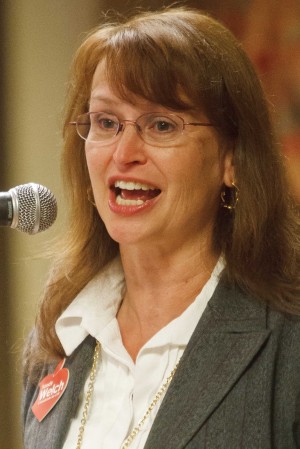
We now have a chance to do something about education.  We can elect Sandy Welch as Montana Superintendent of Public Instruction.

A former math teacher and a successful school administrator, Welch certainly has the academic chops to qualify her for the position.  More important to me is her understanding of economics.

Schools today fail to equip our students with economic literacy.   We continue to turn out graduates who do not understand the basic facts of economic life, and they are walking targets to any financial or political shyster.  No subject is more critical.  Every American sets out each day to improve his or her family’s standard of living.

Sandy Welch gets it.  Early in her career, she worked for an accounting firm.  She wrote a book about financial fundamentals for teens.   She supports a curriculum that emphasizes a firm, internal understanding of basic economics that will accelerate every student’s success in life.

Welch has a clear understanding of the State Superintendent’s role on the State Land Board.  Unlike the incumbent, Denise Juneau, who lines up with environmentalists in opposition to coal extraction in Montana, Sandy Welch appreciates the importance of resource development to our school funding, and to the state’s economy and jobs.

We don’t do anything about the weather because we can’t change it.   But we can no longer consider education a spectator sport.  It’s time to do something.  We can get involved directly with our student’s coursework and classrooms.  We can participate in school board meetings and provide input to administrators.  We can view our schools as more than athletic venues.

And we can elect Sandy Welch as our next Montana Superintendent of Schools.

Tom Balek – Rockin’ On the Right Side

The dancing is kinda weird, but you gotta
love the sound of those great Fender amps –
It’s only two minutes . . . watch this
oldie but goodie by Herman’s Hermits

Don’t know much about geography
Don’t know much trigonometry
Don’t know much about algebra
Don’t know what a slide rule is for
But I do know that one and one is two
And if this one could be with you
What a wonderful world this would be

You Take 16 Credits, What Do You Get? (Another Day Older and Deeper In Debt)

Politicians, economists and educators continue to trumpet the importance of a college education.  At the Montana Conference for Education Leaders in Billings this week, academic experts nodded to each other that in our modern knowledge-based economy, finding a job without a degree will become increasingly difficult.

Yesterday we learned that two-thirds of college graduates last year had student loan debt, averaging $27,000.  Half of recent graduates can’t find jobs, and if they do, they find starting salaries have declined.

The issue is pretty complex.  College tuitions have increased at a greater rate than inflation.  Few students now work while at school.  Employers say colleges are not preparing students to meet their needs.  Americans  have become less nervous about debt and more comfortable with relying on government financial help.  Parents and students have not saved for college.  Many students use loan proceeds for all kinds of spending that is unrelated to school.  Some who receive loans and grants are not really students at all.

Add it all up and we face a $1 trillion student loan bubble.  And if you think all of that debt will be repaid to the taxpayers, I have a bridge . . .

Like the housing bubble, there will be a hue and cry to forgive the debts.  Some will say college education should be free – just like (gulp) Greece.

Is it a hopeless situation?  I don’t think so.   Here are just a few of many course corrections for our state universities that could turn the college cost/benefit dilemma around in fairly short order:

  • Limit student loans to educational costs only – tuition, books, perhaps on-campus room and board, and monitor recipients’ school attendance and performance
  • Take a hard look at the cost-drivers at our state-funded universities – is that new stadium necessary?  Are professor salaries commensurate with student benefit?
  • Eliminate the kickback corruption in the textbook industry – replace printed texts costing over $100 each with electronic media
  • Require student borrowers to have a documented plan for their educational path that leads to economic success – would a commercial bank make a business loan without a plan?
  • Allow and encourage employers (yes, those terrible profit-hungry abusers of the common people) to collaborate on-campus to make a direct connection between education and employment
  • Break up the radical left-wing academic bloc, eradicate their failed social engineering objectives and culture, and replace it with economic realism – the understanding that the reason one attends a university is to improve one’s ability to generate wealth for him or herself, a potential employer, and our nation.

Most important of all – we must prepare our K-12 students with a fundamental working knowledge of economics so that they are equipped to make rational career decisions at graduation.

Tom Balek – Rockin’ On the Right Side

You load 16 tons –
What do you get?
Another day older
And deeper in debt

Sixteen Tons – Tennessee Ernie Ford

Did Your School Tell You About Common Core Standards?

Common Core State Standards – the biggest change in K-12 education in generations.  It’s coming soon to a school near you (or may be there already).  Have you heard about it?  Do you have any idea what it is?  Did anybody ask you if you approve?  Do your legislators know about it?

Whenever there is a big change in government, and it is kept essentially secret from the public, I get a hinky feeling.  The adoption of the Common Core State Standards (CCSS) will have a profound impact on students, teachers, schools, and parents/taxpayers.   Yet it is flying ‘under the radar’, virtually unmentioned by the schools, the media, or anyone else.

According to the Core Standards website, “The standards were developed in collaboration with teachers, school administrators, and experts, to provide a clear and consistent framework to prepare our children for college and the workforce.”  It lays out new instructional methods aimed at making educational outcomes more consistent across the nation and more competitive with other countries.

I have found fairly extensive detail on the web about the proposed changes in teaching methods.  The aim is to start students with a strong foundation of basic skills, and then build knowledge empirically, with a focus on college and career readiness and applied technology.  The approach to education will be more technical, with built-in measurement against standards.  Lofty and worthwhile goals, indeed.

While there seems to have been much work and planning done on methods and measurement, there is one huge component missing in the CCSS framework:  Content.

Under CCSS, the approach to education will evolve from the traditional “What will students learn?” to “How will students learn?”  It makes sense to teach a child how to read well before expecting him to gain knowledge from a text.

I have many questions and concerns about Common Core.  Among them: Will schools cut down on non-academic fluff and social engineering to provide the additional time required?  If the process requires building on a foundation, how can it be implemented by “starting in the middle”?  If it relies on integrating skill-building between subjects, why are only language arts and math on the front burner?  How will CCSS be funded and what will it cost?  These are just for starters.

Perhaps most importantly:  How will local school districts and parents maintain control over curricular content?

CCSS will require new texts and classroom materials.  Because the implementation schedule is so aggressive, choices will be slim.  This creates a windfall profit opportunity for the authors and publishers of the first CCSS-ready texts.  Why do I have the nagging suspicion that the ‘winners’ have already been chosen?   Why do I worry that the few scarce, expensive CCSS-ready texts will be infused with politically-motivated ideology (even more so than current texts)?  

Why is the Common Core State Standards initiative such a big secret?  I want to know a lot more about the CCSS before I will feel good about taking the plunge.

Call me jaded.

Tom Balek – Rockin’ On the Right Side

Your thinking’s so complicated
Yeah, I’m so jaded

Jaded – Aerosmith

See a related post about Common Core Standards by Barbara Rush

Welch Photo: Jr. High Kids in Charge at KFBB?

HOW CHILDISH!

This week KFBB News in Great Falls ran an item about the Montana Superintendent of Public Instruction race, opening with a nice video of incumbent Democrat Denise Juneau addressing her adoring supporters, and featuring pretty children holding “Juneau” signs.

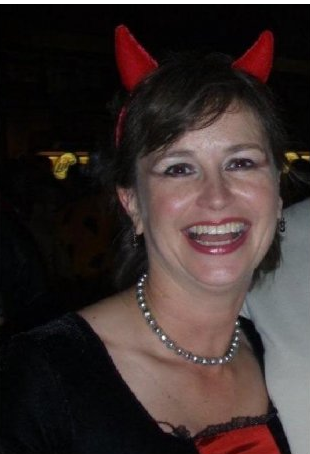
The news producer then had to put a graphic on the screen to represent the challenger, Republican Sandy Welch.  So what image did the station select?  An obscure Facebook photo from a Halloween party showing Welch dressed up as a devil.  Really!

What on earth were they thinking?   A 10-second Google search reveals dozens of appropriate and official photographs of Ms. Welch, and her well-oiled campaign staff is loaded with PR materials immediately available on request, so this was no accident.  Obviously KFBB has no reservations about revealing their political persuasions to the world.

Welch’s campaign has enjoyed big momentum recently,  having won the endorsement of State Senator Jonathan Windy Boy.   Windy Boy said, “Denise Juneau doesn’t understand how to solve the problems our schools are facing. Juneau increases mandates and creates new programs with great media campaigns. Mandates don’t help kids. After hearing Juneau debate, it’s clear that she isn’t focused on increasing school performance. ”

Windy Boy’s endorsement was reassuring to me as an indicator that clear-thinking Native Americans in Montana don’t vote strictly by color (see my post about that).  And, despite Juneau’s insulting contention, I’ll bet they love their kids enough to feed them (see my post about that).

Sandy Welch is probably enjoying a good laugh, and KFBB will doubtless wither in their embarrassment over this juvenile episode. Maybe it was “bring your child to work day” and the producer’s junior high kid was calling the shots.  Or perhaps the producer is bucking for a promotion to the big time – shameless Democrat shill MSNBC.

By the way, I think Sandy Welch is a pretty cute little devil!

Tom Balek – Rockin’ On the Right Side

She’s just a devil woman,
With evil on her mind.
Beware the devil woman,
She’s gonna get you from behind!

Devil Woman – Cliff Richards

Another Report – Montana Parents Don’t Feed Their Kids

A few weeks ago I poked fun at Montana State Superintendent of Schools Denise Juneau when she gleefully reported to the DNC that in Montana “sometimes school is the only place where our kids can get a hot meal and a warm hug.”

Aside from being a direct insult to Montana parents, I thought it was just hyped-up rhetoric for the victim-worshippers assembled at the convention.  But maybe I was wrong.

Now the president of the Montana Rural Education Association, Tim Tharp, has made the same claim.  On “Voices of Montana” with radio host Aaron Flint, Tharp also described “students who come from homes where they don’t always get a good breakfast or have a lot of good food waiting for them when they get home.  We have a lot of kids in poverty across Montana.  They get 10 good meals a week, and that’s what they get- breakfast and lunch at school.”

If this is true – if, in spite of all the numerous assistance and food stamp programs available – there are parents who don’t care enough about their children to even FEED THEM, we have a lot bigger problem in Montana than Michelle Obama’s menu.  What in the world is our Montana Dept. of Health and Human Services doing?  This is blatant child abuse and neglect.

And I submit that if Ms. Juneau (and perhaps Mr. Tharp) has first-hand knowledge of child abuse and fails to report it, they are culpable too.

Like all moral adults, I want kids to have nutritious and enjoyable meals.  I would have no problem if lunch was part of the school budget and provided free for all students, regardless of income.  I would, however, expect parents to take care of feeding their children at home, not only as a parental responsibility, but also as a constructive and enjoyable family activity.

What concerns me are the repeated claims that many Montana parents are neglecting their children and it is apparently acceptable behavior.  If that’s true, shame on all of us, for turning our backs on the social mechanisms that once prevented child neglect.

Is it possible that many Montana parents who actually do love their children, and actually are able to feed them as generations before have done, have decided “if the government will buy all of my childrens’ meals, maybe I should use our family money for something else?”

Tom Balek – Rockin’ On the Right Side

Eat it!  Eat it!
Don’t you make me repeat it!
Have a banana, have a whole bunch
It doesn’t matter what you had for lunch
Just eat it!  Eat it, eat it, eat it!

Eat It – Weird Al Yankovic

Supply and Demand – Another Law No Longer Enforced

Supply and demand.

Please close your eyes, stop your busy brain for a second, and say those three words.  Give me a quick one-sentence explanation of what it means to you.

Okay, ready?

Supply and demand.  Did that phrase register with you?  Was it a simple concept, an obvious and common thing like salt and pepper?  Or did it kind of bounce off, a hazy theory, something you have heard of, but never really thought about?

Even if you can’t give a pretty definition, you probably do understand the concept.  While economists can discuss nuances of the law of  supply and demand for years, the basic concept is simple and intuitive:  the less there is of something, the more valuable it is.  A pound of gold is worth more than a pound of rocks, because there are a lot of rocks in the world, and only a little bit of gold.

Supply and demand is why we get up in the morning and go to work.  We have needs and wants, we want our families to live better.  Every single waking moment of our lives we are active on both sides of the law of supply and demand.  We want to improve ourselves so that the demand for what we do is higher (competition), so we can make more money.  Others want to get our money, so they try to provide something we demand (competition).  The price of everything in the world is controlled by supply and demand.

I can think of no concept more critical to the success of every human being than a gut-level understanding of the law of supply and demand.  It is as undeniable and righteous as the law of gravity.  It should be the basis of our education system.  Sadly, it isn’t.  In fact the law of supply and demand is increasingly ignored, denied and dismissed in our schools, in the media, and certainly by our government.

To keep this sermon to a manageable length, here is an illustration:  if you had a choice between two identical loaves of bread – one cost a dollar and the other cost two dollars – which one would you buy with your own money?  Duh.

Now, if you had a choice between two employees doing the same work – one cost $50,000 and the other cost $100,000 – which one would you buy with your own money?  Double Duh!  So why do federal employees receive more than DOUBLE the compensation of the private-sector employees who pay their salaries?

How can that happen?  The law of supply and demand has been broken.  There is no scarcity of federal employees (over a half million of them make more than $100,000 per year).  They are no more valuable than their private-sector counterparts.  What’s going on here?

The answer is:  Corruption.  Pay to play.  Quid pro quo.  We have allowed government employees to unionize.  The unions promise money, logistical support, and votes to elected officials in exchange for more union jobs and higher pay and benefits.  Get me elected, I’ll pay you back, with somebody else’s money. Pay me back, I’ll get you elected.  The taxpayer has no input or control over this.  It is a done deal.  The law of supply and demand has been broken, and until we eliminate government employee unions, this corruption will escalate until our economy and nation is destroyed.

There are many more examples of government breaking the law of supply and demand – crooked contracts, cronyism, manipulating interest rates, all the things that make elected officials stinking rich.  But this one – government employee unions – is the big kahuna, because of the vast number of people involved.  ObamaCare promises another 21 million government union employees.  It’s the perfect crime.

I can’t help but wonder if more Americans understood and recognized and respected and enforced the law of supply and demand, would they hold their government accountable?

Tom Balek – Rockin’ On the Right Side

These days the buck stops nowhere
No one takes the blame
But evil is still evil
In anybody’s name
If dirt were dollars
We’d all be in the black

If Dirt Were Dollars – Don Henley

How’s This For A Plan? STOP!

I’m tired of hearing Democrats insisting that the Republicans and conservatives “have no plan”.

The liberal solution to every issue, question, and challenge is a new government “program” that will spend more money and will live forever, even after it fails or is obsolete.  Education is failing?  We must not be spending enough.  Our GDP is not growing?  More government spending.  Our favorite socially-engineered industry (green energy) can’t compete in the real world?  Give them more public money.

So when a Republican does not propose a new “program” featuring more government spending (and debt), that is the equivalent of “doing nothing” or “having no plan”.

Hogwash. Here’s a plan for you.

We must immediately STOP the ridiculous, wasteful government programs already in place that accomplish nothing.  The liberals’ insistence that government spending spurs the economy is deceitful – every dollar government gives to one person or company was taken from another person or company, and a big slice is missing by the time it gets to the receiver due to waste, corruption, and inefficiency.  Government spending, while sometimes necessary, is a proven drag on the economy.  Raising taxes makes it worse, and printing and/or borrowing money to spur the economy just delays the pain.

The quid pro quo, pay-to-play, corrupt paybacks to unions, corporate donors, cronies, and special interest groups must be STOPPED now.

Let’s immediately STOP the attacks and roadblocks on our energy industry by the Obama administration via the EPA and other agencies and aligned special-interest groups.   We have the resources and the technology to become the energy supplier to the world, and could do so quickly.  What do they not like about more jobs, a positive balance of trade, and elimination of the dependence on hostile foreign suppliers?

We can and must immediately STOP the flow of illegal aliens across our borders, most of whom end up collecting welfare.  This isn’t even a choice, as our laws and Constitution require it.

We must STOP throwing good money after bad, doing things the same way out of habit.  We have to STOP politicizing and polarizing every issue and shouting at each other across the ideological divide without even listening for kernels of wisdom that might be on the other side.

And because the stakes are so high, and our fiscal crisis is so urgent, we must focus on economics and STOP wasting time on all the distractions and bogus issues – the class warfare, the make-believe “war on women”, the race-baiting.  Unless we straighten out our fiscal mess, nothing else really matters.

One of the corny, childish jokes from the old Hee Haw television program (yes, you ARE old enough to remember) featured Archie Campbell as the country doctor.  A different patient every week would complain,  “Doc, it hurts when I do this.”  The wise doctor would always give him a whack and yell, “Then DON’T DO THAT!”  Not exactly rocket science, is it?

There are a lot more specifics to the plan of Republicans and conservatives.  But the best parts of their plan include the word STOP!

Tom Balek – Rockin’ On the Right Side

It’s time we stop,
Hey, what’s that sound
Everybody look what’s goin’ down

For What It’s Worth – Buffalo Springfield

Juneau: Montana Kids Are Abused

Montana Children Waiting To Be Fed By Their Teachers

On behalf of the state of Montana, I apologize to America.  Our state superintendent of schools, Denise Juneau, spoke to the DNC and the entire nation yesterday, and I am embarrassed to have everyone see how low our once-great state has sunk.

Juneau revealed to the world that “Sometimes school is the only place where our kids can get a hot meal and a warm hug”.  She admitted that Montana parents do not care enough about their children to even feed them, or show affection.

She confessed that without President Obama, our kids have no chance for success.  But if Obama is re-elected, the opportunities are limitless – our children, she said, can emerge “from a home with a struggling single mom to the White House”.

Montana parents offer no future to our kids, especially single moms and our Native American families.  “Teachers are the only ones who tell kids they can go from the Indian reservation to the Ivy League,” she said.   I’m sorry you have to see how horrible our Montana parents are, based on the damning report by Denise Juneau.  So bad that teachers have to raise our kids for us, and even they can’t succeed unless Barack Obama is re-elected.

Juneau’s opponent for the office of superintendent of Montana schools, Sandy Welch, says if we can stop the Obama administration, senators Baucus and Tester, the EPA, and the radical environmental groups from blocking the development of our abundant energy resources, our economy will improve dramatically, along with family incomes, the tax base, and funds for education.

But Denise Juneau, in her speech, pointed out that it’s better to beg for scraps from a federal government sinking in debt, and rely on more hope and more change from a failed President rather than support Montana parents and local school boards and administrators, even if it holds down teacher salaries.

America, I’m sorry for what has happened to our Montana kids.

Tom Balek – Rockin’ On the Right Side

Hungry for those good things, baby
Hungry through and through
I’m hungry for that sweet life, baby
With a real fine girl like you

Hungry – Paul Revere and the Raiders

Montanans Don’t Care About Their Kids

What do you want your child to be able to do when he or she becomes an adult?

Let me guess:  How about “make a good living, have a nice home, raise a family?”  Perhaps “have a comfortable lifestyle without being burdened with debt and insecurity?”  Maybe “save some money for a comfortable retirement?”

You may have other, more fuzzy aspirations for your child, such as “happiness” or “love” or “fulfillment”.  But I’ll bet the items I mentioned above are at the top of your list.

Then why have you and I and every Montana parent not DEMANDED that our schools teach our children about money?

Except those who are on welfare, or are retired, or are so disabled that they are excluded from work, every American wakes up each morning and sets out to improve his or her family’s standard of living.  It’s the essence of life.  We have wants and needs, and we strive to fulfill them within the economic system in which we live.  One would think that our education system would be geared toward that top priority of life, and our children would leave school with a fundamental working knowledge of the role of money, finance, and economics in our free-market democratic republic.

But no.  Our state requires high school students to learn mathematics, language skills, social studies, science, health, art, world languages, and vocational/technical studies.  An extensive array of fine arts is recommended.  But my search of the Montana Office of Public Instruction website did not find the word “economics” mentioned EVEN ONCE.

The OPI website includes numerous articles trumpeting the importance of Indian studies, but none about how to make our Native American students financially successful and independent.

Can you name one human activity that does not involve money?

Can you guess how many high school athletes become professional athletes?  Basketball: .03% .   Football: .09%.   We know how much attention and money is paid to those pursuits.

But how many high school students will need to earn a paycheck or make a profit, file a tax return, handle financial transactions with confidence, understand how their government handles their money, buy insurance, manage a family budget, make intelligent borrowing, saving, and investing decisions?  100%.

(By the way, most professional athletes are bankrupt within a few years of the end of their playing careers, because they weren’t taught economics in school either.)

Some Montana schools offer consumer economics classes or a make a minimal attempt at teaching economics within other courses.  But I’ll bet the participation rate is miniscule where offered.

The biggest failure in our education system is the refusal to provide our children the financial literacy they need to thrive and survive.  As we continue to matriculate generation after generation of walking economic victims, our nation flounders in debt, our dependency on government explodes, and we elect whichever pandering politician promises to give us the most free “stuff”.

One can only conclude that Montana parents either haven’t seriously thought about the importance of economics, or they think their kids are destined to become professional athletes.  Either way, the kids are screwed.

Tom Balek – Rockin’ On the Right Side

We don’t need no education
We don’t need no thought control
No dark sarcasm in the classroom
Teachers leave those kids alone

Another Brick In the Wall – Pink Floyd

Please Don’t Vote

“Get Out the Vote”!  It’s a good thing, right?  Everybody should vote!  It’s your responsibility as an American. It’s patriotic.  It’s for the good of the country.

Ask anyone you meet – should every American be allowed to vote?  The automatic, enthusiastic, unequivocal response is always: “Yes!”

Just for the exercise, let’s set aside our rigid posture (and the Constitution) and ask, “What is best for our country, and our childrens’ futures?”

Should a person who has never paid taxes get to vote?  Where else in the circus of life can a person decide how another person’s money is spent?  Half of US citizens pay no federal income taxes, but they still get to elect those who spend the money taken from the other half.  Isn’t that a golden opportunity for corruption? I’ll break this down:  “Vote for me, and I’ll give you somebody else’s money.

I VOTED! WOO HOO!

Should a person who has no understanding of candidates, issues, government, history, or economics be allowed to vote?  Let’s be honest, a large percentage of our citizens are economically and politically illiterate.  They don’t read or watch any news. They don’t know who the vice president is.  They can’t find China on a globe.  And they are absolutely not able to make an intelligent decision about how our government should be run for the benefit of all.

We don’t let children vote.  Why?  Because we assume they have no clue what they are voting about.  Unfortunately, when it comes to important events, many of our adult voters are child-like in their understanding of the world.  An astute and well-educated fifth-grader is more qualified to vote than many adults.

Should a person who can’t prove eligibility get to vote?  A state legislator from a college town here in Montana was recently testifying against stricter identification rules for state voters.  “This is so unfair!” she wailed.  “If we lengthen the registration period, how are our out-of-state and international students going to be able to vote?”

In a world where personal identification is a requirement of daily life, asking a voter for ID is just common sense, and everyone knows it.  Those who oppose it clearly intend vote fraud.

It may seem that I want to take away the average guy’s right to vote.  I don’t.  But I do think that every voter should have skin in the game – when each voter pays at least some taxes, he will be more interested in how the money is spent.  I think our education system should be dramatically improved so that by adulthood, each citizen knows our country’s history, understands economics, and is equipped to vote intelligently.  And I think we should protect the sanctity of our electoral process by making sure that only eligible voters cast ballots.

Call me a rebel.

Tom Balek – Rockin’ On the Right Side

ImageI’d like to help you son,
But you’re too young to vote!

Summertime Blues – the Beach Boys