
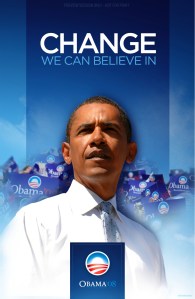
 I had an interesting conversation with a liberal this week – a junior manager who works very hard, earns a modest salary, and would like to improve his family’s standard of living.
Our business conversation had turned to the hesitancy on the part of business owners to invest. “No one is willing to pull the trigger on any major spending in the current political climate,” I said.
My friend asked, “What does politics have to do with whether or not a business owner wants to invest?”
I pointed out that politics and economics are inseparable. After all, the only thing a government can do is spend other people’s money. Everything the government does affects the economic environment, and conversely, voters and supporters of candidates make decisions based on their own current financial situations. Business owners are not confident right now that risking additional capital will provide them with any financial reward.
“Well I have always been a liberal,” my friend said. “And I agree with you, nobody wants to spend for anything right now.”
I let him talk.
“Nobody wants to upgrade their facilities or hire more employees. They just don’t know if customers will be able to afford to buy their products.”
I nodded. Keep thinking, young man.
“You know,” he continued, “wages sure aren’t what they used to be – if you can find a job at all. People can’t afford to buy houses and cars and other things because they just aren’t making enough money.”
He was on a roll.
“If nobody can afford to buy things, why would you want to build a new store or hire more people?” he concluded. “Times are tough.”
I wanted so badly to deliver my speech about how government waste, corruption and misguided overspending takes a huge bite out of our GDP and personal wealth. About how government social policies discourage savings and personal responsibility. About how federal fiscal policy has devalued our dollar, destroyed our balance of trade and built an insurmountable debt. About how we have become a nation of undereducated, disengaged sheeple, victim to any media-savvy, slick-talking promiser-in-chief.
I wanted to ask, “So why are you a liberal?” Instead, I shook my head and said, “Gee, I wonder what has changed?”
He didn’t answer. But the concerned look on his face told me he knew.
Tom Balek – Rockin’ On the Right Side

I still don’t know what I was waiting for
And my time was running wild
A million dead-end streets
Every time I thought I’d got it made
It seemed the taste was not so sweet
Changes – David Bowie
 Flashback: 1995, Manhattan, Kansas. I had just bought a home near Lake Tuttle and was out on my first Saturday motorbike cruise to check out the neighborhood. Down the road a few miles I came upon a large, open field and a cluster of men looking skyward in intense concentration.
 Today we call them drones, and as we speak you may have one quietly buzzing over your head, perhaps observing you.
 A shout out to the Vietnam vets –
 As a kid I thought it must really be something to be a millionaire. We read “Richie Rich” comic books and imagined how cool it would be to live in a mansion, with servants and cooks and an indoor swimming pool.
 Today, while waiting for a haircut at a local “clip joint”, I looked for a magazine to pass the time. Of the 50 or so in the rack, I found only one that was not written for women. I admit I was tempted to open one of the ladies’ rags to find out “What Men Really Want”, as promised on the cover. Not that I care about other men, mind you – I just wanted to see if the editors got it right. But my old-school inhibitions kicked in, and I reached for the men’s magazine instead.
 Real median household income in the US is about $50,000 per year. This includes wages, business income, and most forms of government assistance. Household income is roughly the same as it was in 1989, adjusted for inflation, after
  There she was, across from Chris Wallace. Her taught facial lines belied her 73 years, her posture was perfect, and her bright eyes and smile registered a ten on the energy scale.
 Like all guys from Montana, I love my boots. When you get a pair of boots that fit just right, you want to keep them wearable as long as you can. I needed new soles and heels, and quickly – I was starting a new job in a couple of days.
 There has never been a time – in my lifetime at least – when there was so much BUZZ about guns.


