
 Donald Trump is against the Trans-Pacific Partnership. Bigly.
Hillary Clinton is also against it. But she was for it before she was against it. Trump says Hillary is still for it, quoting her claim that the TPP is “the gold standard of trade agreements.” And according to a recent WikiLeaks leak, she actually is still for it, but she’s upset that the people who were assured she was against it have learned that she is secretly still for it, even though she says she’s against it.
Whew!
Most Americans don’t have a clue what the TPP is, and Clinton’s flip-flops on the issue don’t help matters. The TPP is only one part of a bigger policy issue: the importance of free and fair international trade to our economy. So let me try to sort this thing out, as best I can, in layman’s terms.
The TPP is a multi-national trade agreement that was intended to counterbalance China’s dominance in world trade. About six years ago, a dozen Asian and Pacific nations (see map above) starting working on a plan that would eliminate tariffs on most trade between the partners, and would make doing business with each other smoother and easier. Sounds good, right? What could be wrong with easier trade between a bunch of countries who, for the most part, get along with each other pretty well?
As you might expect, things got complicated in a hurry, and this perfectly illustrates why trying to bring a bunch of countries together for any group activity is like herding cats. Everybody will try to protect his own interests and maximize his own profits. And nice guys finish last.
There is no such thing as a simple agreement between twelve nations, especially when some want to force others to do things they don’t want to do. Right from the start there was disagreement over whether and how the pact should include measures to address concerns about global warming (aka climate change). There were issues about nation-of-origin labeling, and workers’ rights, and enforcement of patents, trademarks, and intellectual property rights. The lines of authority between government and big multi-national corporations were blurred, including who could sue whom, in what courts, in case somebody’s underwear should get in a knot. Some governments subsidize certain industries and agriculture; others do not. And a major concern was whether and how workers would be allowed to move between member nations.
Donald Trump says his top priority is to put “America First” in every international policy decision. Clearly, complex, multilateral trade negotiations will not ordinarily result in our interests being placed above all the other partners. He is alarmed that our balance of trade has been so profoundly negative for so long. He worries that we are losing jobs to other countries, and opening our borders to foreign workers would not help. So his opposition to the TPP makes sense in the context of Trump’s defense of American interests.
Hillary, on the other hand, is a victim of the very “divide and conquer” strategy she and the Democrat party have favored for decades. She panders to dozens of small groups of constituencies who, over the long haul, are just another herd of cats all going in different directions. Her union constituency is opposed to the TPP, fearing loss of jobs. Some of her environmentalist constituency favors it, assuming the USA would have to accede to the liberal environmental policies espoused by many of the partners; others fear the TPP would not be stringent enough. Hillary has said that she dreams of a “hemispheric common market with open trade.”
President Obama, with help from Republican speaker of the house Paul Ryan, passed a fast-track provision for the TPP last year. And U.S. trade representative Michael Froman said this week he thinks the TPP has enough congressional support to pass in the lame duck session after next week’s election.
As for me, I’m with Trump. Shouldn’t we just negotiate trade agreements with each nation individually? And negotiate from a position of relative strength, taking advantage of the many perks we offer our friends – like military protection, for instance?
At the very least, let’s not pass this thing in the lame duck session, when Congress is least accountable for their actions.
Tom Balek – Rockin’ On the Right Side

All of a sudden I began to change
I was on the dance floor acting strange
FlCapping my arms I began to cluck
Look at me . . . I’m the disco duck!
Believe it or not, this song was the big hit of the year when my daughter was born (1976). I’m pretty sure this is what started the “Disco Sucks” movement, and the genre mercifully died in 1979.


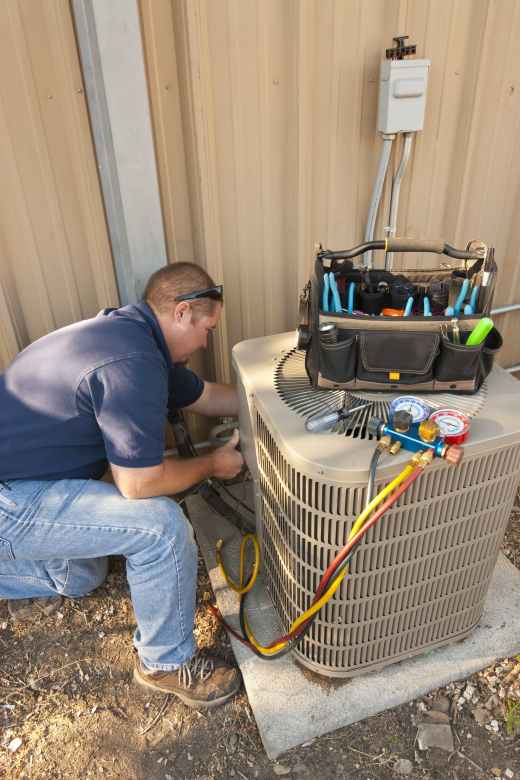 I was visiting with my young HVAC guy after he installed a new air conditioner in one of my rental houses. Actually, it was more like negotiating than visiting. He said he gave me a good deal, and I chuckled, “I know you did, but I have to go through the routine.” I was happy to write the check – he more than earned it.
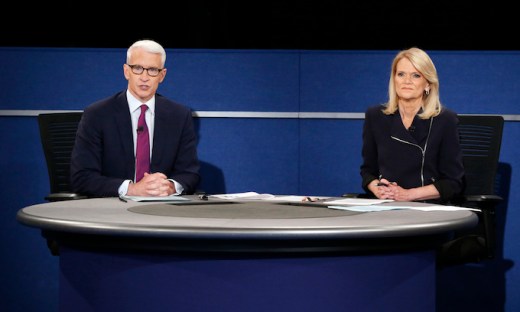
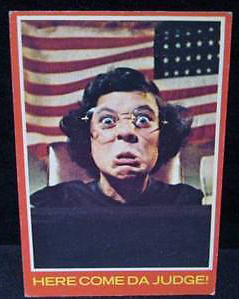 One more month until Decision Day, and as of this writing the 2016 presidential election is still a toss-up.
 A few weeks ago I ran into Samuel, a dual citizen of Nigeria and the United States. A well-educated businessman, his wife is a political consultant whose work takes her to every corner of Africa. Samuel made his living buying cars in Europe and the USA, and selling them in Nigeria to corporate clients who work for Shell, Coca-Cola, and other well-heeled clients. But he says it’s getting almost impossible to do business in Nigeria.

 The bull riders were ready to pack up their saddles and head off toward the sunset. Even the world’s toughest athletes can only take so much bull***t.
 So when the manager of the Spectrum Center told PBR head honcho Sean Gleason that he could not have the U.S. Customs and Border Agents present the flag before his event because they carry guns, Gleason threatened to shut down the show.

