
Greece, Hot Fudge Sundaes, Boehner/McConnell, and Junior-High Economics

hot fudge sundaeIn 1966 I was a junior high kid in small-town Montana when I got my first – and maybe most important – lesson in economics and personal finance.

That year was a whirlwind of change for me.  I had just left city life in the projects with my welfare mom to live with my dad, a hard-working small-business owner.  Everything was new – the small-town culture where people are accepting but demand responsibility; the freedom and fresh air walking through the woods and fishing in the beautiful mountain streams; the first exposure to the working world where one gets only what he earns; the little family luxuries like having clean clothes to wear and breakfast on the table every day.

But back to my economics lesson.

I didn’t know it at the time, but the crabby old guy who owned the local drug store was actually on a one-man mission to teach economic responsibility to the local youth.  Allen’s Drug Store featured an old-fashioned soda fountain, and old-man Allen served up a world-class hot fudge sundae:  whipped cream, nuts, and a cherry on top.  For a quarter!

Like most small-town kids at the time, I was doing odd jobs and making a buck here and there.   I also got an allowance of fifty cents per week, which seemed like a fortune to me.   A quarter for a hot fudge sundae at the drug store was well spent, and I had bought a few for cash before I learned from my older sister that Mr. Allen would actually let you “charge” the cost of a sundae, and you could pay him later.

I ran right down to Allen’s and ordered up my hot fudge sundae.  “Can I charge it?” I asked.  “Sure,” Mr. Allen said.  I felt like a big shot.

The next day I was back at the drug store, charging another sundae.  It just doesn’t get better than this!  And within another day or so I was back again.  And again.

One day Mr. Allen went to his little box of index cards, picked out mine, and saw that I owed him for a half-dozen sundaes.  “I’m afraid this is the last one, until you pay your bill,” he said.  I was a little bit ticked off, because I had already spent all my money on Mad magazines, baseball cards, and other important stuff.  But then I started thinking about the whole “charge account” thing, and it started to make sense.  Mr. Allen couldn’t just give me free sundaes forever.  And I couldn’t eat sundaes every day when I was only bringing in fifty cents a week.

So I went without sundaes for a while and saved enough money to pay my bill.  My sundae consumption went way down.  I found that they actually tasted a lot better on the rare occasion when I decided to buy one – for cash.

Thanks for the lesson, Mr. Allen.

Today the nation of Greece defaulted on its IMF loans.  Banks put limits on withdrawals.  Stock markets tumbled worldwide.  It’s not that Greece’s economic collapse is, on its own, that big a deal – their GDP is only about equal to that of Louisiana.  What really scares thoughtful people is that other European nations – and the United States, the world’s largest economy – are following the same path as the Greeks.

Even junior high kids can understand that spending more than one earns is a recipe for disaster.  Our Federal Reserve, and the European central banks, held interest rates to zero for many years so that our governments could borrow and spend (pandering for votes) to the point that repayment of the debt is metaphysically impossible.  In addition to the federal insolvency, local and state governments have promised pensions and benefits to their employees (again, pandering for votes and union support) that citizens will never be able to afford.

It is embarrassingly simple.   If we don’t elect conservative officials with at least junior-high level economic skills, and if we don’t allow them to restrict government growth and spending, there will be no more hot fudge sundaes.  Try telling that to your grandkids.

Boehner and McConnell have to go.  So do the many representatives whose sole interest is holding on to their positions and power. Our only hope is to support and grow the Freedom Caucus, Congress’ conservative wing and the only antidote to the liberal Republican leadership.  And we must elect a president who understands economic reality.  At least at the junior-high level.

Tom Balek – Rockin’ On the Right Side

Rockin' On the Right Side

Got to pay your dues
If you wanna sing the blues,
And you know it don’t come easy!

It Don’t Come Easy – Ringo Starr


A fun little romp with George and Ringo!

School Choice and Fairness

school-bus-1368136904lVvQuestions of “fairness” come up often in the debate over school choice.

Is it fair that some students attend quality public schools and get a great education while others are left in failing and dangerous schools?  Is it fair that one school district receives and spends $30,000 per student while another can only muster $6,500?  Is it fair that some families can afford to send their children to private schools while others must attend the school assigned to them by the government?

These are all part of the bigger issue of redistribution of wealth:  Is it fair for the government to take, by force, the property of one citizen and give it to another?

Americans almost universally agree that a good education system is necessary for our collective security and economic well-being, and we are all happy to contribute our fair share to that end.  To a point.

A while back I was discussing school funding with a friend, state representative Ryan Osmundson, who owns a cattle feed business in rural Montana.  I told him I was astonished that many rural school districts had budgets of $22,000 per student and up.  I facetiously asked if a local rancher with four kids went to the school office every fall and wrote a check for $88,000.

Of course they don’t.  And I doubt that very many parents think about where the money came from before it went to their football team, their books, their desks and their teachers.  Reality check:  if you didn’t write a check (or pay property tax) for your school’s average cost per student times the number of students you are sending to school, somebody else is paying your bill.  Is that fair?

But back to Osmundson.  “That’s not the half of it,” he said.  “The superintendent of my rural school district is after me all the time because I am home-schooling my six kids.  He says I am costing his district a lot of money by keeping six students off the school rolls.”

I blinked a couple of times, trying to absorb how not sending kids to school costs money.

Then Osmundson said, “I told the superintendent he should be thanking me.  The way I see it, I am saving the taxpayers $132,000 a year, and paying schools taxes to boot!”

My daughter is home schooling her twins while paying for schools they don’t use.  Fair?

Earlier this month I learned much about school choice at the Franklin Center’s “Amplify Choice” conference in Washington, DC.  Spending per student at a private high school we visited was about half that of the public schools, and yet the quality of education was vastly superior.  Spending and results are clearly not directly correlated.

We agree that it is in our best interest to educate all of our children to the highest standard that is practical, and there is really only one fair way to share the cost of that effort:  education funds must travel with the student to the competing school of his family’s choice.

Whether in the form of school vouchers, or tax credits, or scholarships, or one of the many other “backpack” funding plans, only when the money follows the student will our education system be fair.

Tom Balek – Rockin’ On the Right Side

Rockin' On the Right Side
Treat me right!  Treat me right!
Open your eyes,
Maybe you’ll see the light.
Ooh-ooh, Treat me right!

Treat Me Right – Pat Benatar

K-12 Spending: more, More, MORE!

Education spending.  More is better, right?

For years we have heard reports that teachers are forced to buy paper and supplies out of their own pockets, that some teachers qualify for food stamps, and that there have been “draconian cuts” to K-12 education budgets for decades.  Stories of the heartless underfunding of education are delivered with emotion and indignation, but seldom with statistical validation.

As student scores, college readiness and employability of graduates continue to decline across the U.S., the mantra of educators and progressives increases in volume and pitch.  “More money.  Just give us more money.  All we need is MORE MONEY!”

Seattle Times Headline Ed Spending

At a recent conference on school choice presented by the Franklin Center, Dr. Ben Scafidi shredded many of the myths about American taxpayers short-shrifting students.

Scafidi, director of the Economics of Education Policy Center at Georgia College and State University, said spending per student continues to increase sharply, studies prove that student achievement does not rise as a result of more spending, and there is no evidence that students are any harder to teach than they ever were due to non-school influences.

The most compelling finding of Scafidi’s 2012 study titled “The School Staffing Surge – Decades of Employment Growth in America’s Public Schools is this:

From 1950 to 2009 the number of students increased by 98%.  The number of teachers in public schools increased by 252%.  Meanwhile the number of administrators and other school staff increased by 702%.

Scafidi said, “If from 1992 to 2012 our public schools had increased non-teacher staff at the same rate that it increased teaching staff, it would have freed up $26.5 billion per year in education funds.  That could translate to an $8500 raise for every teacher, or a huge reduction in taxes, or scholarships that would allow many students to attend the schools of their choice.”

Opponents of school choice contend that students who remain in traditional public schools are harmed when budget dollars follow students to private or charter schools.  But Scafidi points out that charter and private schools operate so much more efficiently than the traditional public schools that fixed costs for the existing schools (about 36%) can still be covered by available funds and the remaining students in those schools benefit by the reduced variable costs.

Clearly there is no direct equivalency between dollars spent per student and results.  Test scores, graduation rates, and college matriculation at the private and charter schools I visited in Washington, DC were nothing short of miraculous compared to those of the traditional DC public schools, despite spending less than half the amount per student.

In previous posts I have reported school budgets in rural Montana schools of $22,000 per student per year.  While many of these students are getting a great education, by no means are they twice as smart as their city-school peers.  The cost is merely a function of declining numbers of students versus increasing costs, largely spending required by federal and state regulations and not the local school board.

I have personally seen many aggregious examples of non-academic school spending.  One Montana school district with 350 high school students keeps a stable of five cruiser buses, most equipped with personal video players, for their athletic and extracurricular teams.  Schools so small they can only play six-man football travel 350 miles to games.  My local school district in South Carolina just spent $6 million on artificial turf.  That’s got to affect the cost per student, without really improving student outcomes, wouldn’t you say?

Voters and taxpayers: next time you hear educators and progressives hollering for “more, more, more money!” you might ask how the extra dollars will be spent and how will students benefit.  Better yet, demand that the dollars coming from your hard earned pay can go with each student to the school of his or her choice.

Tom Balek – Rockin’ On the Right Side

Rockin' On the Right Side

And when you ask ’em, “How much should we give?”
Ooh, they only answer “More! More! More!”, y’all
It ain’t me, it ain’t me, I ain’t no millionaire’s son
It ain’t me, it ain’t me, I ain’t no fortunate one!

School Choice in DC – It’s Working

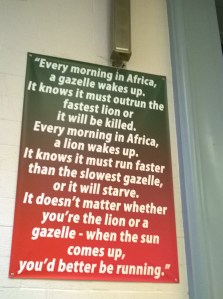
lion_gazelle posterMark Roberts, graying but still athletic in his crisp suit and tie, stood in the center of his circle of 15 students.  Every eye was on the articulate and energetic instructor as he probed their understanding of the character in their literature assignment, “Things Fall Apart” by Chinua Achebe.  The high school juniors bounced their thoughtful and mature-beyond-years analyses off the teacher and each other.  There was not a slacker in the room; each young scholar was as bright and engaged as the next.  And I thought, “I have never seen a high school class like this.”

Like most conservatives, I have always advocated school choice.  In my Adam Smith / free market / supply and demand worldview, whenever consumers have a choice the right products are delivered at the right cost, guided by the “invisible hand” of the marketplace.  Competition drives excellence in every aspect of life.  Why would education be any different?

Last week at Archbishop Carroll Catholic high school in Washington, DC I saw the proof of the theory firsthand.  Without question, these kids have very bright futures and a leg up on their public-school peers.  Maybe two legs, an arm, and a head.

Located in the middle of one of DC’s lowest-income neighborhoods, Archbishop Carroll has evolved over the years.  The aging but well-maintained facility was originally a boy’s school, one of the first segregated schools in DC.  Carroll later went co-ed, absorbed students from other Catholic schools, and in recent years has become a highly-sought educational alternative for families who want to extract their children from the grim, underperforming DC public schools.  While Catholic religious training is offered at Archbishop Carroll, it is not required, and only about 20% of the students take CCD.

Tuition at Archbishop Carroll is about $13,000 per year – far below the amount taxpayers spend annually to educate students at the failing non-charter DC public schools.  Many families pay the full tuition out-of-pocket.  In the interest of diversity, discounts are offered to white, Asian, and Latino students (the student body is almost entirely African-American), as well as registered Catholics.  Over half the students would not be able to afford to attend Archbishop Carroll without grants from the Opportunity Scholarship Program.

Archbishop Carroll competes with other private and charter schools for students by offering families a rigorous, no-nonsense academic program in a safe and uplifting environment.  With strong emphasis on accountability, discipline and character development, Carroll provides the education product and opportunity for future success that most parents want for their children.  But the competition doesn’t end there.

On a tour of the school organized by the Franklin Center as part of their “Amplify School Choice” conference, I asked student Wanofe Mideksa if she is a “superstar”, hand-picked to entertain us.  “Not really,” she explained.  “All the students here are high-achievers, because we have to compete to get into Carroll.”  Students are selected for admission by test scores, admission essays and interviews.  Once enrolled, they have to maintain their motivation levels.  Most students take public transportation, some traveling as long as an hour each way.  They wear jackets and ties, and dresses.  They are addressed as “Mr.” and “Miss”  and decorum is maintained at all times.  The school deliberately sets tuition just beyond the scholarship amount to ensure that every family has “skin in the game.”

And Archbishop Carroll competes for the best instructors.  “Our teachers don’t sit down during class,” said the school president, Mary Elizabeth Blaufuss.  “You won’t find them texting when they should be teaching.  They are here because they want to be part of a serious academic program.”

Education is no different from any other product or service.  When consumers have choices and suppliers have to offer the very best products to compete for their business, everybody wins.

Tom Balek – Rockin’ On the Right Side

Rockin' On the Right Side

Did you ever have to make up your mind?
You pick up on one and leave the other one behind
It’s not often easy and not often kind
Did you ever have to make up your mind?

Did You Ever Have to Make Up Your Mind?  – The Lovin’ Spoonful


Made in the USA – By Mexicans

mexican concrete crewMy wife and I are building a new home.  We are doing some of the work ourselves but the majority of the work is done by subcontractors, mostly hired through our general contractor.  Working on a major project like this brings many current political and economic issues from the big-picture level down to the up-close and personal level.

Today, as our driveway was being installed, I had quite a discussion with the owner/operator of our concrete finishing company.  Alex (not actual name) is a legal Mexican immigrant and has been doing business in the US for almost twenty years.  He went through channels, got a green card, and studied English for two years.  Alex pursued the American dream, and got it.  He has handled several segments of our construction project, and does top quality work at a fair price.  Working in the same space every day we got to know each other and today we spent some time discussing business and politics.

Alex’s business is doing well.  In fact, there is much more demand for his work than he can fulfill.  He would like to hire more employees and expand his business, but he can’t see a way to do it and still maintain quality.  As a retired corporate manager and business owner, I offered some growth strategies and personnel practices that have worked for me.  But his circumstances are quite different than mine were.  You see, all of his employees are (probably) illegal Mexican immigrants.

In fact, almost all of the residential construction work in the Carolinas is being performed by illegal Mexican immigrants.

Why?  Have Mexican immigrants taken all of the construction jobs because they will work for lower wages than American tradesmen?  Are American men now too lazy or pampered to take on the difficult, physical work required in the construction trades?  Have our schools convinced every American student that anyone who doesn’t pursue a college degree and a desk job is a failure?  Did our government over-regulate our traditional construction businesses into extinction, so that only “under-the-radar” groups of illegal immigrants can function at a feasible cost?

Yes, yes, yes, and yes.

But there’s more to it than that.  I talked with another general contractor today who was interested in hiring Alex and his crew for some of his projects, only to learn they are over-booked.  “It’s a shame,” he said.  “Most of the (American) subcontractors went broke during the housing bust five years ago, and they aren’t coming back.”

Alex and many entrepreneurial Mexicans like him are able to seize the market opportunities because they are connected to the available army of illegal Mexican immigrant workers.  Alex can find them, hire them, manage them, communicate with them, and help them with the considerable personal challenges they face working in the shadows of American life.   Still, his business growth is limited because he employs these men.  “My business can’t grow,” he said.  “None of my workers can advance to be managers because they don’t even try to learn to speak English.”  He would employ English-speaking American construction workers, but there just aren’t any.  It’s a very complex business model.

I had heard that Latinos are being barraged with liberal propaganda, painting conservatives, Republicans and especially Tea Party guys as hateful monsters to be avoided and feared.  So I made it a point to tell my new Mexican friend Alex that I am a conservative.  Tea Party, even.

Alex winced.  “I’m not a monster,” I said.  “I’m not a racist and a hater.  You know me.  You can’t believe the stuff you hear in the media.”

“Well, the conservatives don’t want to allow any immigration,” he said.

“Not true,” I countered.  “We want LEGAL immigration for people who can bring value to our country.  What we don’t want is  dangerous, uncontrolled borders, or slackers coming here to take advantage of taxpayer-funded benefits.   And we DO want our legal immigrants to assimilate – to become patriotic, law-abiding, productive Americans, not Mexicans who just happen to live in the US.”

Like you, Alex.  Without you, and men like you, there would be no new homes under construction in my neighborhood right now.

Tom Balek – Rockin’ On the Right Side

Rockin' On the Right Side

Save me from this prison, Lord, help me get away
‘Cause only You can save me now from this misery
‘Cause I’ve been lost in my own place
And I’m getting’ weary, how far is Heaven?
And I know I need to change my ways of livin’
How far is Heaven?
My favorite Mexican band – Los Lonely Boys! (this song is also on my set list)

The Poor Don’t Need More Food

food driveEvery day, especially during the holiday season, we are buried in news reports about low-income Americans who don’t have enough to eat.  There are food drives, community food banks, charity events, and fundraisers galore collecting food and money for food, all based on the premise that the poor just aren’t getting fed.

Contributors to these food charities get a temporary, warm fuzzy feeling.  But the whole “starving children” thing is a big sham, and food charity does little or nothing to actually help the poor improve their lives.

Our citizens, through government welfare programs, provide generous food subsidies for the poor.  As I reported recently, the SNAP program grants up to $632 per month on EBT debit cards for a qualifying family of four.  There are deductions based on income, but cash from most welfare programs is excluded. The monthly SNAP dollar allowance is considerably greater than most non-welfare families spend on food, resulting in high incidence of obesity among SNAP participants.  In addition, 68% of students get one or two free or heavily-subsidized meals at school every day.

I’m not saying it’s fun to be on welfare, or that we should abolish all food subsidies.  I am saying that lack of food is NOT the main problem for the poor, and providing more food via charities is NOT helping them.  The few scarce hungry Americans are victims of neglect, abuse, and mental illness – problems that must be addressed, but in a completely different way.

So why are we so obsessed with providing EVEN MORE FREE FOOD for the poor?  Wouldn’t it make more sense to direct this huge pool of charity funds to something that actually does some good? 

We could provide economic education, job skills and actual employment opportunities so poor families might escape the sad trap of welfare dependency.  We could monitor and counsel poor adults and children, helping develop good decision-making, parenting, and life skills.  We could actually get involved at the personal level, helping with individual needs – a car repair so one can get to work; a plane ticket so another can help an ailing relative; a home-cooked meal for a senior who can get food but can’t cook.

This sounds like charity as it once was in this country.  Charity that was most often organized by churches.  Charity given in the form of time, personal involvement, and caring, in addition to money.  Sadly, today’s secular liberal culture discourages faith.  Forced charity funded through taxation and administered through soul-less government computers has dried up the river of personal, church-sponsored work that used to actually help people.  Now, the extent of our caring for others is reduced to buying them more and more food, making them even fatter, while leaving them dependent on the government and making the same bad choices as their parents and grandparents did.  We don’t want to get involved, so let’s throw them another can of food.  We can wear ribbons, join a publicized walk to promote “awareness”, and then leave our neighbors behind.

The poor don’t need more food.  Frankly, they don’t need that carload of junk from WalMart that many have come to expect from charities every Christmas.  They need jobs, and they need guidance from good people – caring and constructive shepherds who can show them the way to a better life.

Tom Balek – Rockin’ On the Right Side

Rockin' On the Right Side Who can I believe in?  I’m kneeling on the floor.
There has to be a force, who do I phone?
The stars are out and shining,
But all I really want to know –
Oh, won’t you show me the way?
I want you to show me the way.

Show Me the Way – Pete Frampton

They Will Still Be Going To the Emergency Room

Emergency-RoomOur favorite young waitress was bringing us more sweet tea.  As she approached, my wife noticed a little “limp” and asked her about it.
“I got a rash on my leg yesterday and it’s worse today,” she said.  “It bothers me when it rubs on my pants.”

Assuming our customary Mom and Pop roles, we chatted about what the cause of the rash might be, considering possible medical solutions.  The young lady’s next line was a stunner.

“I guess I will go to the emergency room after my shift,” she said.

We gasped simultaneously – “the EMERGENCY ROOM?!  Why would you go there?”

Her response: “Well, I don’t have insurance so whenever I need medical care I just go to the emergency room.  They don’t make me pay the bill right away.”

My wife and I exchanged baffled looks and started asking questions.  We wondered how, on a server’s wage, she could afford to make payments on what must be an outrageously expensive emergency room visit.  Maybe she doesn’t pay at all.

“Why don’t you go to an ‘urgent care’ clinic?” we asked.   “There’s one across the street and it probably charges one-tenth of what the emergency room will charge you.”  She gave us a curious look.

We also suggested she could stop in at one of the many nearby drug stores who offer affordable minor-medical care and even free advice from the pharmacist.  She didn’t know there was such a thing.

Then we pointed out that our county provides a list of free and low-cost medical clinics.  But it occurred to me that it would probably cost her a day of work to even get in the door of a government clinic.

The young lady seemed grateful for the Mom and Pop advice, and hopefully she will seek out one of the alternatives we proposed.

Our short conversation with a hard-working young waitress reminds me how badly screwed up so many things are these days: the ridiculous cost of medical care, the failures of our education system, inadequate parenting, bumbling government, our crazy tax system, the challenges of employment, and more.  How does a young woman get to the age of 25 without knowing how to get appropriate minor medical care?  Where were her parents?  Her teachers?  Will she still be a low-wage worker ten years from now, or will she have moved up and out?  Why is even minor medical care so expensive it is out of reach for many workers?  Should restaurant owners pay higher wages or benefits?  Would that squash one of the few remaining industries (and employers) left in our teetering economy?

Our waitress will get a W2 from her employer at the end of the year and will probably take it to H&R Block because, like most Americans, she is afraid and ill-equipped to tackle even the simplest short-form tax return on her own.  And her tax preparer will tell her that because of the new Affordable Care Act she will have to pay a fine next year if she does not obtain a health insurance policy on her own.  I doubt she has ever heard of the ACA — it isn’t listed on I-Tunes.  She doesn’t really know what health insurance is, how it works, or how to get it.  If she did learn and understand the ACA requirements, would she choose to pay the fine or to buy the insurance?  Or would she just continue to use the emergency room?

Lost in the discussion of the ObamaCare mess is the fact that hospitals are still required to provide medical care to anyone who comes in the door, regardless of ability to pay.  And a large percentage of the people within our borders have no more knowledge or sophistication than to go, when sick, to the building where the sick people are.  The ACA personal “mandate” is a joke.

If there is one good thing about the ObamaCare fiasco, it might be that Americans will finally stop and think about the economics of health care in our country.  We only got to this point of helplessness and chaos because for generations we have been dependent on employers and/or the government for our health care.  The concept of shared risk for shared cost – insurance, by definition – is still very valid.  Sadly, that can only work in a prosperous free market economy, which may now be little more than a distant memory in the age of big government.   Every time a government bureaucracy replaces a segment of the free market, disaster results.  A train wreck, even.

The bad thing about the Affordable Health Care Act is that it makes health care more Un-Affordable.  It is clearly about control, politics, and big government, not cost.

The failure of our elected leaders to deal with the festering health-care issue a long time ago led us to the calamity we face now.   They, and we, had better get serious, because, contrary to the campaign speeches, we know there is no such thing as a free lunch.

Oh, speaking of lunch, the gyros were great.

Tom Balek – Rockin’ On the Right Side

Rockin' On the Right Side

All over the country, I’ve seen it the same
Nobody’s winnin’ at this kind of game
We gotta do better, it’s time to begin
You know all the answers must come from within

Free Ride – Edgar Winter Group

Adrian Peterson’s Love Child – Never Meant To Be

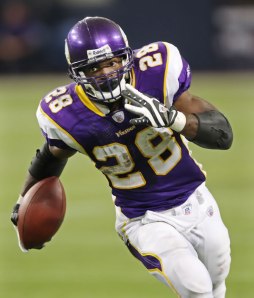
AdrianPeterson[update 10/17/13 th to Hank Jones, related article from Baltimore Sun]
 

Another sad headline via the sports pages:  “Adrian Peterson’s Young Son Dies After Assault”.

Peterson has received much sympathy from the public and his teammates, and has reported that he will unquestionably play in today’s game against the Panthers.  Yes, it’s a tragedy, but it’s not Peterson’s fault.  Or is it?

It’s certainly a tragedy for the two-year child, who did not pick his parents. He was born to Peterson and a “girlfriend”.  Then shaken to death by her new “boyfriend”.  Call me old-school, but I still think kids should be raised by married mothers and fathers, not boyfriends, girlfriends, gay lovers, and Hillary’s “village”.

Kansas City Chiefs fans still wail about the tragedy when star defensive end Derrick Thomas was paralyzed and later died from a car crash while driving to the airport in a snowstorm.  One of his two passengers was also killed.  Thomas left behind seven children by five different mothers, he was not married to any of them, and he blew his millions of dollars so fast he didn’t leave them a penny. State Senator Bill Kenney, a former Chief, called Thomas “a true hero.”

Marriage is now obsolete, and I think this may be the biggest threat facing our society and our economy.  Look at the listing of births in your local newspaper.  Only about half of these precious little creatures are born to parents with the same last name.  The other half begin their journey through life with two strikes against them.  Some will succeed, but most will face poverty and will be dependent on their peers who were raised in a traditional family.

The breakup of the American family, and the subsequent dependency of unwed mothers on the government, has caused an avalanche of social problems.  By eliminating the economic need for fathers, we have done untold damage to generations of kids that will be tough, if not impossible, to reverse.  The solution is not as simple as just cutting back spending on welfare and food stamps – that would only do more damage to the kids. A culture shift is the only thing that will get us out of this tailspin.

Too many parents are now conditioned to think it is “somebody else’s” responsibility to see that their kids get an education.  That they get breakfast and lunch.  That they have school supplies and warm coats.

My wife recently visited with a single mom who was concerned about the federal government shut-down.  “What if they stop Head Start?” the stay-at-home welfare mother asked.  “My kids are supposed to know their ABC’s before they get to grade school.  What am I going to do?”  It obviously never occurred to her to turn off the TV and teach them herself.

I’m guessing all of you who read this are old enough to remember the Scarlet Letter, Nathaniel Hawthorne’s story about a young Puritan woman who was branded as an adulterer and shunned by her community.  It was required reading for junior high kids back when we were in school, when marriage mattered.  The Scarlet Letter is no longer in the curriculum, for two reasons:  One is Common Core, which limits most school reading to non-fiction, featuring themes such as global warming and diversity.  The other is the fact that today’s kids don’t “get it” when they read about adultery.  What’s wrong with two unmarried people having sex?  Doesn’t everybody do that?

I know, I am a social dinosaur, severely outnumbered and out-dated.  But I was here when life was better – back when kids had moms and dads with the same name.

Tom Balek – Rockin’ On the Right Side

Rockin' On the Right Side

Love Child, never meant to be
Love Child, born in poverty
Love Child, always second best
Love Child, different from the rest

Love Child – Diana Ross and the Supremes

Blacks Need This Kind of Leadership

BALABlack unemployment is nearly double that of the national average.  Black Americans are disproportionately represented in the lower-earning strata of workers because so many have education and technical skills that lag significantly behind the norm.

Why, then, do so many black leaders support more immigration, both legal and illegal?  Why do they fight education reforms, such as school vouchers, which would allow black families access to better schools?  And why do they continue to advocate government dependency  programs instead of directing time, effort, and money to financial and workplace literacy and competency?

Bernard Anderson, economist from the University of Pennsylvania criticizes our current government policy, but for the wrong reason.   “One thing the president can do is accelerate, deepen, and strengthen the enforcement of anti-discrimination policies, Anderson said.  “That’s one thing the president can do and from all evidence, the Obama administration has been asleep at the switch.”

Wrong.  If discrimination is part of the problem, it is a minor part.  From 1900 to 1960 the black participation rate in the labor force was equal to or higher than whites.  Was there less discrimination then?  Did we not just elect a black president?  Twice?

Our labor market is flooded with immigrants, many here illegally, which has the double-whammy effect of stealing entry-level and baseline jobs from Americans while pushing down pay rates – simple supply and demand.  When combined with well-meaning government benefits programs, and an education system that does no favors to poor families,  it sets up the perfect storm for a perpetually unemployed class of citizens, a disproportionate number of whom are black.

Maybe this is no accident.  A person dependent on government benefits for his free food will probably vote for the person who, cynically, promises more free food (whether or not he delivers).

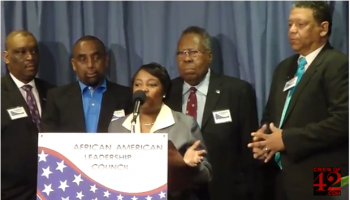
Today the Black American Leadership Alliance hosted a march and rally in Washington, DC. Calling it the “March for Jobs”, the organization called on Congress, the Gang of Eight, and the Congressional Black Caucus to oppose the headlong rush toward amnesty for illegal immigrants and increased legal immigration.

This is the kind of leadership needed, not more of the same old failed liberal policies: increased immigration with less border enforcement, government and union control over education, and accelerating dependence on benefit and food programs.

Tom Balek – Rockin’ On the Right Side

Rockin' On the Right Side

Where you lead, I will follow
Anywhere that you tell me to
If you need, you need me to be with you
I will follow where you lead

Where You Lead, I Will Follow – Carole King

People Got To Be Free – Including Black People

Freedom plateI have worried about the racial polarity evident in our elections.  Minorities, especially blacks, have tended to vote in lockstep for Democrats.  I don’t understand it, because I can’t see where Democrats have elevated the lives of African Americans in any way – in fact, the opposite seems to be true.

And from a personal standpoint, if a group told me day after day, year after year, generation after generation that I am not capable of taking care of myself and my family – that I am inferior to others and unable to compete – I would be furious.

I have never really believed the statistics we are presented about the black community’s political leanings.   Everywhere I look there are black families who appear to believe in and live every principle of conservatism.   It’s hard to accept that all of these people close the curtain and pull the “D” switch every time.

This week a Democrat state senator from Louisiana, Elbert Guillory, switched to the Republican party, with a very polished and carefully crafted video speech explaining his decision.  Granted, the production had “campaign” written all over it, and Mr. Guillory will no doubt receive a great deal of notoriety.  Still, the message he delivers is a perfect analysis of the state of political affairs in the black community.


I hope we will see a burgeoning “emancipation” movement among African Americans – a reach for freedom from generations of what Guillory calls “plantation” treatment at the hands of Democrats who have taken their loyalty for granted for far too long.

Tom Balek – Rockin’ On the Right Side

Rockin' On the Right Side

All the world over, so easy to see
People everywhere just wanna be free
I can`t understand it, so simple to me
People everywhere just got to be free

People Got To Be Free – Felix Cavaliere and the Rascals

Isn’t it strange how so many of the “Peace” and “Freedom” songs of the sixties are appropriate now?  Today’s political “left side” claims these songs, but the roles are reversed – they are now the oppressors, the imperialists and the intolerant.  Check out this great concert clip of Ringo Starr’s band with guest Felix Cavaliere.