Budgeting For Dummies

My wife and I were so excited when we bought our first home back in the 1970s, just a few miles west of Malmstrom Air Force Base in Great Falls.   We hadn’t been there more than a month and were outside in the yard, raking leaves.  Suddenly we saw a huge plume of thick, black smoke rolling out of the base.

“What the heck is that?”  We looked at each other, and guessed that a plane must have crashed and exploded.

We looked in the newspaper the next day, and watched the TV news, anticipating a story about the mystery explosion at the base.  But there was no report.

Still curious, a few days later I asked a friend who worked at Malmstrom, “What was that big cloud of smoke at the base all about?  Was there a plane crash?”

Puzzled, he said nothing out of the ordinary had occurred.  Then he said, “Wait a minute, was that Friday?”  I said yes.  He said, “Oh, that’s normal.  On the last day of the month, they always pour their excess jet fuel on the ground and burn it so they get their full allocation for the next period.  They call it fire fighter training.”

It’s common knowledge.  The way budgeting works in every government department is thus:  you get what you got before, plus a little more.  Whether you need it or not.  Whether your department is functional or not.  Whether the program is still needed or not.  Whether we have the money or not.

Is it any wonder our governments are bloated, inefficient, and ineffective?  Can you imagine any family or business running like this?

Our US Senate has not even bothered to write a budget for over three years.  Didn’t seem to matter much, did it?

I can give countless other examples of the idiocy of our government budget process, but I’m sure you have plenty of your own.

Rick Hill, Montana candidate for governor, really got my attention when he said he would work to implement “Priority Based Budgeting” if elected.  It didn’t get much of a reaction in the press, but I think it is the singular most significant promise I have heard this year by any candidate for any office.


Imagine if Hill’s common-sense idea were implemented at all levels of government.  We would find thousands of government buildings and other assets no longer needed, agencies who compete inefficiently with each other to provide the same services, and buildings full of desks full of people whose purpose became obsolete long ago.

There is no excuse for the laziness of our elected officials, who shirk their oversight responsibilities for the myriad of government agencies and departments.

If elected, Rick Hill and Mitt Romney and other elected executives have a golden opportunity before them: they can press the RESET button.  It might work like this:

  • CITIZEN RESET – Every citizen who receives an entitlement (other than social security) has one year to re-apply for program qualification.  Are you receiving disability?  Let’s make sure you are still disabled (or ever were).  Are you on unemployment?  You will be required to show that you are actively making yourself available and employable.
  • GOVERNMENT RESET – Every department has one year to justify its existence, demonstrate and quantify the value it offers taxpayers, and request its first zero-based budget.  The executive will require legislative oversight that is meaningful, detailed, and transparent.  And all payments made by the government will be audited against the budget.

Using the data management capabilities that are commonplace in business today, fraud and waste in government are easily preventable.  In spite of their promises, our elected officials have never even tried, and there is no time like the present.

Oh, and all government employees will be required to read “Budgeting for Dummies.”  There will be a quiz.

Tom Balek – Rockin’ On the Right Side

Zero-based budgeting,
according to Billy Preston
(gotta love the hair!)

Nothin’ from nothin’ leaves nothin’
You gotta have somethin’
If you wanna be with me

Nothin’ From Nothin’ – Billy Preston

Sandy Welch Understands Economic Literacy

Has there ever been a politician who didn’t tout the importance of a good education system?  I’ve never seen one.  They all agree.

Ask any citizen or businessperson what’s really important for success individually, or as a nation.  The answer will almost certainly include, “a good education.”

I find that education is like the weather – everybody talks about it, but nobody does anything about it.

We now have a chance to do something about education.  We can elect Sandy Welch as Montana Superintendent of Public Instruction.

A former math teacher and a successful school administrator, Welch certainly has the academic chops to qualify her for the position.  More important to me is her understanding of economics.

Schools today fail to equip our students with economic literacy.   We continue to turn out graduates who do not understand the basic facts of economic life, and they are walking targets to any financial or political shyster.  No subject is more critical.  Every American sets out each day to improve his or her family’s standard of living.

Sandy Welch gets it.  Early in her career, she worked for an accounting firm.  She wrote a book about financial fundamentals for teens.   She supports a curriculum that emphasizes a firm, internal understanding of basic economics that will accelerate every student’s success in life.

Welch has a clear understanding of the State Superintendent’s role on the State Land Board.  Unlike the incumbent, Denise Juneau, who lines up with environmentalists in opposition to coal extraction in Montana, Sandy Welch appreciates the importance of resource development to our school funding, and to the state’s economy and jobs.

We don’t do anything about the weather because we can’t change it.   But we can no longer consider education a spectator sport.  It’s time to do something.  We can get involved directly with our student’s coursework and classrooms.  We can participate in school board meetings and provide input to administrators.  We can view our schools as more than athletic venues.

And we can elect Sandy Welch as our next Montana Superintendent of Schools.

Tom Balek – Rockin’ On the Right Side

The dancing is kinda weird, but you gotta
love the sound of those great Fender amps –
It’s only two minutes . . . watch this
oldie but goodie by Herman’s Hermits

Don’t know much about geography
Don’t know much trigonometry
Don’t know much about algebra
Don’t know what a slide rule is for
But I do know that one and one is two
And if this one could be with you
What a wonderful world this would be

You Take 16 Credits, What Do You Get? (Another Day Older and Deeper In Debt)

Politicians, economists and educators continue to trumpet the importance of a college education.  At the Montana Conference for Education Leaders in Billings this week, academic experts nodded to each other that in our modern knowledge-based economy, finding a job without a degree will become increasingly difficult.

Yesterday we learned that two-thirds of college graduates last year had student loan debt, averaging $27,000.  Half of recent graduates can’t find jobs, and if they do, they find starting salaries have declined.

The issue is pretty complex.  College tuitions have increased at a greater rate than inflation.  Few students now work while at school.  Employers say colleges are not preparing students to meet their needs.  Americans  have become less nervous about debt and more comfortable with relying on government financial help.  Parents and students have not saved for college.  Many students use loan proceeds for all kinds of spending that is unrelated to school.  Some who receive loans and grants are not really students at all.

Add it all up and we face a $1 trillion student loan bubble.  And if you think all of that debt will be repaid to the taxpayers, I have a bridge . . .

Like the housing bubble, there will be a hue and cry to forgive the debts.  Some will say college education should be free – just like (gulp) Greece.

Is it a hopeless situation?  I don’t think so.   Here are just a few of many course corrections for our state universities that could turn the college cost/benefit dilemma around in fairly short order:

  • Limit student loans to educational costs only – tuition, books, perhaps on-campus room and board, and monitor recipients’ school attendance and performance
  • Take a hard look at the cost-drivers at our state-funded universities – is that new stadium necessary?  Are professor salaries commensurate with student benefit?
  • Eliminate the kickback corruption in the textbook industry – replace printed texts costing over $100 each with electronic media
  • Require student borrowers to have a documented plan for their educational path that leads to economic success – would a commercial bank make a business loan without a plan?
  • Allow and encourage employers (yes, those terrible profit-hungry abusers of the common people) to collaborate on-campus to make a direct connection between education and employment
  • Break up the radical left-wing academic bloc, eradicate their failed social engineering objectives and culture, and replace it with economic realism – the understanding that the reason one attends a university is to improve one’s ability to generate wealth for him or herself, a potential employer, and our nation.

Most important of all – we must prepare our K-12 students with a fundamental working knowledge of economics so that they are equipped to make rational career decisions at graduation.

Tom Balek – Rockin’ On the Right Side

You load 16 tons –
What do you get?
Another day older
And deeper in debt

Sixteen Tons – Tennessee Ernie Ford

The Spinning Wheel of Soft Corruption

Two political television ads for opposing candidates are running concurrently in Montana and they illustrate with startling clarity how our national politics has devolved.

One says Senator Jon Tester can’t be trusted because “he received more money from lobbyists than any other DC politician”:


The opposing ad rips Congressman Denny Rehberg for publicly stating that “lobbying is an honorable profession.”


Both candidates are guilty as charged –  they accept money from lobbyists.  A lot of it.  Because they have to.

It is the spinning wheel of soft corruption, and it spins day after day, election after election, in races large and small all over the country.  It takes a lot of money to get elected, so politicians accept donations from special interest groups who seek to control or influence their votes.  The special interest groups have a lot of money to give them, because of the huge profit opportunities that exist in a “government gone wild.”

Can a candidate avoid the spinning wheel?  Is it possible to raise a competitive war-chest of funds without selling at least a part of one’s soul?

Ask Sharron Angle, who challenged the Godzilla of the Democrat party, US Senate Majority Leader Harry Reid, for his seat in 2010.  Her brilliant new book “Right Angle” peels back the curtain to reveal how ugly the political process has become.  Sharron tells the story of a fellow assemblywoman in the Nevada legislature who admitted she couldn’t support Angle’s bill because she had accepted a contribution from the casino lobby, as did nearly every legislator in Nevada – except Sharron Angle.  Sharron confronted her (former) friend:

“You can say you hate the bill.  You can say that it is unconstitutional for government to interfere with regulations on private business.  You can say that it is not Republican and would send the wrong message about its support of less government regulation.  But do not ever tell me you’ve been bought!”

I said it so coldly that I shocked even myself.  She was stunned, too.

“I have not been bought!”  She was emphatic.

“Really?” I said.  “Let’s review our conversation.”

Sharron Angle could not be bought, and was still able to win a seat in the Nevada legislature.  She narrowly lost in the big race against the incorrigibly corrupt Reid, whose special-interest contributors included, against all reason,  the National Rifle Association.  She says,

“It takes courage to resist.  It takes insight to recognize the trap.  Some do, many more do not.  Easy money is the lobbyists’ deadly Kool-Aid.  It is the same corruption that John Adams recognized and said would destroy our Republic.”

Last year in a brief personal visit with Denny Rehberg, we were bemoaning this very issue – the spinning wheel of money and soft corruption that makes the political world go ’round.  Rehberg said, “I don’t need to run for the Senate.  My spot in Congress is probably secure for as long as I want it.  The only reason I decided to put myself and my family through this is we can’t afford to leave the Democrats in control of the Senate and this seat is important.”

That makes me feel a little better.

Tom Balek – Rockin’ On the Right Side

Another timeless classic featuring
David Clayton Thomas

What goes up, must come down
Spinnin’ wheel, got ta go round
Talkin’ ’bout your troubles it’s a cryin’ sin
Ride a painted pony,
Let the spinnin’ wheel spin

Spinning Wheel – Blood, Sweat and Tears

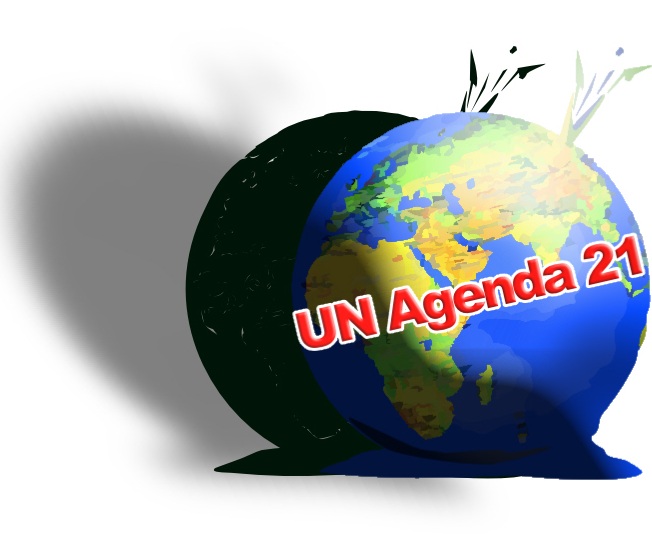
Agenda 21 Is Finally on the National Radar

A couple of years ago when Tea Parties and other conservative groups started warning about dangerous socialist influences infiltrating our local governments, I was a skeptic.  “I’m not a conspiracy theorist,” I thought.  “Agenda 21?  Sounds like Area 51.  That stuff is just too crazy to even my waste time thinking about.  I’m a realist, I’m worried about the economy and the national debt.  Don’t bother me with the fringe nutball stuff.”

The Agenda 21 story was never picked up by the mainstream media, but it seemed there were more and more news items about “sustainable” growth initiatives, and bike lanes, and expensive projects with marginal (if any) apparent benefits. A common theme was the proliferation of grants – “free” money from the federal government, usually involving NGOs (non-governmental agencies).  Although the money always comes with strings attached, it seems irresistible to cash-starved city and county departments.

When people I know and trust began rolling up their sleeves, standing up to their city councils and county commissions, and loudly “outing” the socialist agendas and harmful effects of these initiatives, I had to start paying attention.  If you have read this far and don’t know what Agenda 21 is, or why you should be concerned, it’s time for you to start paying attention, too.  You can start with the Wikipedia entry.  Probably the deepest research on the origins and dangers of Agenda 21 was done by investigators working for Glenn Beck.

According to Brushfires of Freedom Montana, a conservative and constitutional watchdog group, “There are literally thousands of Agenda 21 projects going on in Montana.”   New initiatives pop up almost daily all over the state and some are undoubtedly worming their way into your local governments – just look for the word “sustainable” and follow the grant money.

I was surprised to see this morning that Reuters published a feature story about Agenda 21 and it hit the other mainstream news sources.  While far from a definitive piece, just the appearance of Agenda 21 on the national radar screen is big news.

I’ll tell you what is definitely NOT sustainable – our government’s insatiable spending and the exploding national debt – and I will stay focused on that.  But at the risk of being labeled a “nutball conspiracy theorist”, I will stand with my conservative brethren and the state legislatures that have taken a stand.  Agenda 21 is a threat to our personal liberties that must be faced down.  It can’t be a secret any more.

Tom Balek – Rockin’ On the Right Side

Mmm mmm
Something’s comin’ over, mmm mmm
Something’s comin’ over me
My baby’s got a secret

Secret – Madonna

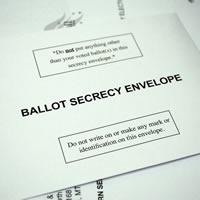
Absentee Ballots – Invitation To Voter Fraud

There are so many things going haywire in our nation that you just can’t keep up with them all.

It’s like whack-a-mole.   “Federal Land Grabs!”  Bam!  “Agenda 21!”  Bam!   “Election Fraud!”   Bam! Bam! Bam!  You can’t keep up – when you try to smack down one issue, two or three more pop up.

Yesterday a friend and I made a trip to our County Courthouse to meet the Clerk and Recorder and learn all about our old ES&S 570 tabulator (vote counting machine).  We wanted to know exactly how this thing works and if there are any weaknesses or opportunities for hanky-panky.  We were warmly greeted and our Clerk went out of her way to answer all of our questions.  She even took time out of her busy day to give us a test drive.

The machine is a pretty clunky old gal, but understandable and serviceable.  There are opportunities for people error, but the machine itself is pretty fool-proof as near as we could tell.  However, our visit actually pointed us to an unexpected and much bigger problem – absentee ballots.

Our secretary of state, Linda McCulloch, insists “voter fraud is nonexistent in Montana“.   If your local fire chief tells you “fires are nonexistent in my town”, you’d better start looking for a new fire chief.   He not only may not see fires that do occur, he also doesn’t feel the need to prevent them.  Great gig if you can get it.

The fact is, our absentee ballot system is a neon-flashing, irresistible invitation to any unscrupulous group wanting to control an election.  Here’s why:

Every voting jurisdiction in Montana, and in most states, mails absentee ballots to out-of-state addresses.  Many are sent to people who previously lived in the district.  Some are college students who originally registered using their parents’ address.  In any event, if someone is registered to vote in the district, all they have to do is request an absentee ballot, fill it out and sign it, and return it to the county clerk.  As long as they keep voting, they remain registered at the last address on file and can continue voting forever, regardless of where their ballot is sent.  They never have to set foot in the state.

I asked our clerk if they check to see if these out-of-state absentee voters are also registered to vote in other states.  “No,” was the succinct reply.

How many votes in Montana elections are being placed by people who no longer live here?  Or perhaps never did?  How easy would it be for me to register to vote in Montana, using a fictitious name and/or address, and then ask for an absentee ballot to be sent to me in Newark, New Jersey?  Using technology, why couldn’t I do this a thousand times or more?

It may sound like too much work for an amateur like you or me for just one vote.  But elections are no longer just about choosing the right person for a local government office.  There are huge government dollars at stake and deep pocket special-interest groups who will do and spend whatever it takes to throw an important election – think, for instance, Al Franken.  And what’s the down-side if you get caught?

The only verification of absentee voters is a brief check of the signature on the envelope against the scanned signature on the registration at the secretary of state’s website.  In our courthouse, whoever gets the mail performs this function.  It is unsupervised and unscientific at best (I watched a small batch being checked-in and saw a very suspicious signature accepted.)  I know there are many conscientious employees in our county offices, but if it’s a busy day, especially in a very large district, is this a step that might get skipped?  Following up on a suspicious signature is tedious and time-consuming.  Who would know the difference?

We all love the convenience of absentee voting, and its use is exploding all over the country.  I maintain that vote fraud will explode right along with it unless we take one or two preventative steps:

  • stop mailing absentee ballots out of state
  • develop a nationwide registration system and cross-check registrations, similar to that built by True The Vote, a national voter integrity advocate group

I know my libertarian friends oppose national ID cards and related identification processes such as fingerprint and retina imaging, but this would be yet another perfect justification for their use.

This is not an indictment of our County Clerks and their employees.  In our sparsely-populated, rural state, there is probably less election fraud than in populous areas.   In larger cities, where ballots are handled in huge batches and nobody knows anybody else, and where votes are worth big money, it looks like easy money.

Tom Balek – Rockin’ On the Right Side

This video of the Who in 2001 includes
bassist John Entwistle just before his death, and
Zak Starkey (Ringo’s son) on the drums –
sure looks like his Dad, but plays even better!

Who are you?
Who, who, who, who?

Who Are You – the Who

Did Your School Tell You About Common Core Standards?

Common Core State Standards – the biggest change in K-12 education in generations.  It’s coming soon to a school near you (or may be there already).  Have you heard about it?  Do you have any idea what it is?  Did anybody ask you if you approve?  Do your legislators know about it?

Whenever there is a big change in government, and it is kept essentially secret from the public, I get a hinky feeling.  The adoption of the Common Core State Standards (CCSS) will have a profound impact on students, teachers, schools, and parents/taxpayers.   Yet it is flying ‘under the radar’, virtually unmentioned by the schools, the media, or anyone else.

According to the Core Standards website, “The standards were developed in collaboration with teachers, school administrators, and experts, to provide a clear and consistent framework to prepare our children for college and the workforce.”  It lays out new instructional methods aimed at making educational outcomes more consistent across the nation and more competitive with other countries.

I have found fairly extensive detail on the web about the proposed changes in teaching methods.  The aim is to start students with a strong foundation of basic skills, and then build knowledge empirically, with a focus on college and career readiness and applied technology.  The approach to education will be more technical, with built-in measurement against standards.  Lofty and worthwhile goals, indeed.

While there seems to have been much work and planning done on methods and measurement, there is one huge component missing in the CCSS framework:  Content.

Under CCSS, the approach to education will evolve from the traditional “What will students learn?” to “How will students learn?”  It makes sense to teach a child how to read well before expecting him to gain knowledge from a text.

I have many questions and concerns about Common Core.  Among them: Will schools cut down on non-academic fluff and social engineering to provide the additional time required?  If the process requires building on a foundation, how can it be implemented by “starting in the middle”?  If it relies on integrating skill-building between subjects, why are only language arts and math on the front burner?  How will CCSS be funded and what will it cost?  These are just for starters.

Perhaps most importantly:  How will local school districts and parents maintain control over curricular content?

CCSS will require new texts and classroom materials.  Because the implementation schedule is so aggressive, choices will be slim.  This creates a windfall profit opportunity for the authors and publishers of the first CCSS-ready texts.  Why do I have the nagging suspicion that the ‘winners’ have already been chosen?   Why do I worry that the few scarce, expensive CCSS-ready texts will be infused with politically-motivated ideology (even more so than current texts)?  

Why is the Common Core State Standards initiative such a big secret?  I want to know a lot more about the CCSS before I will feel good about taking the plunge.

Call me jaded.

Tom Balek – Rockin’ On the Right Side

Your thinking’s so complicated
Yeah, I’m so jaded

Jaded – Aerosmith

See a related post about Common Core Standards by Barbara Rush

Corruption in Small Town Montana

We tend to think corruption happens somewhere else.  Chicago maybe.  Surely not in rural Montana.

It hurts to admit that our beautiful state is just as vulnerable to government corruption and election fraud as anywhere else.  Maybe more so, because rural people are often trusting souls.

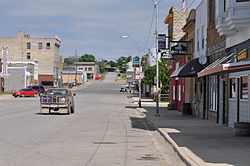
The recent release of Lynn Rosenberg from prison resurrects the story of the “Wheatland 6” and the ugly corruption scandal that enveloped the community of Harlowton a few years ago.

The story got more national attention than local.  If you are one of the many who missed it, here’s a Cliffs Notes version of the sordid tale.

In January of 2008, Lynn Rosenberg was sentenced to 54 months in prison for the theft of over $194,000 in taxpayer funds (the actual amount embezzled was probably greater) and aggravated identity theft.  Mrs. Rosenberg ran the Office of Public Assistance in Wheatland County, a one-person department in the small town of Harlowton.

The drama began when authorities learned that for years she had been creating fake welfare client accounts, mostly using identities of former Wheatland County residents who had moved away long ago.  She set up bank accounts and post office boxes to receive welfare checks, food stamps, and EBT cards (electronic benefit cards), forging endorsements on the checks and draining the cards at Wal-Mart.  The scheme finally blew up when an anti-theft federal computer program cross-matched one of her welfare “clients” as a truck driver in Oregon who had been earning $80k per year since 2003, and hadn’t received benefits since he lived in Wheatland County in 1991.

For years, Mrs. Rosenberg was on a taxpayer-funded spending spree, aided by many people who had to have known, or at least suspected, that something was amiss.  So why didn’t anybody “blow the whistle” sooner?

One possible reason: her husband, Jim Rosenberg, was – and still is – the county sheriff, a powerful local figure clearly able to ruin your day if you are a local resident.

In November of 2010 a group of concerned Wheatland County citizens, who came to be known as “the Wheatland 6”, were incredulous that Sheriff Rosenberg was running for re-election as if nothing had happened.  His wife had admitted serious embezzlement from the taxpayers.  “If he knew about it, he is corrupt.  And if he didn’t know, he is incompetent.  Either way, we want him out,” the Wheatland 6 said.

The group met with the Montana Dept. of Justice to determine if the DOJ had investigated whether the Sheriff was complicit in the embezzlement scheme.  The response from the DOJ was to refer them to federal authorities, who had requested jurisdiction in the case, calling prosecution at the federal level a “cakewalk”.

The Wheatland 6 mounted a primary campaign to battle Sheriff Rosenberg’s re-election.  To their amazement, the Sheriff had some local support, but their relentless efforts to educate local voters began to get traction, and in the days approaching the primary they were confident the voters would reject a sheriff whose wife is a convicted felon serving time.

Two citizens who were later aligned with the Wheatland 6 were election judges, working in the voter area at the polling station on election day.  They watched and noted many inappropriate and disallowed practices, such as vote counters (who should be sequestered) wandering around the voting area and conversing with election judges and voters, discussing the counts, and making and receiving phone calls during the process.  They witnessed “chaotic” conditions in the counting room, as officials allowed lists and ballots to be strewn around the room, with little or no oversight of the reading and counting of votes.

Feeling insecure as novice election judges, they did not question other, more experienced election officials about these improprieties during the polling.  But they were so alarmed at what they saw, they sought out the County Clerk immediately after the polls closed.  Based on their observations, the County Clerk agreed that there should be a recount, and said she would look into it.  When she failed to follow through on her promise, the citizens began the process of seeking an official recount, escalating their request to the Commissioner of Political Practices and the Secretary of State.

After initially encouraging the Wheatland 6 to pursue a recount, support from the Secretary of State’s office soon waned, leaving their fate in the hands of the county commissioners.  At the next commission meeting, the commissioners refused to hear any testimony, approved the canvass, sealed Rosenberg’s primary win, and summarily ruled against recount.  Their response to the upset citizens was, “If you don’t like our decision, sue us.”

Life goes on in Wheatland County.  Jim Rosenberg won the general election and is still the sheriff.  His wife again lives in Harlowton, having completed her prison sentence.

And the Wheatland 6 still wonder who they can trust.

Tom Balek – Rockin’ On the Right Side

Nobody rocks it like Steve Miller –

You know he know just exactly,
What the facts is.
He ain’t gonna let those two escape justice,
He makes his livin’ off of the people’s taxes.
Go on, take the money and run!