If my grandparents and great-grandparents were alive, I’m pretty sure they would be embarrassed at what we have allowed to happen to our country. Their country.
My grandparents were workers. They were second generation immigrants from Eastern Europe and Scandinavia. Their parents came to America with no expectations that anything would be given to them. All they expected was freedom to work, live, and worship.
Income redistribution was the furthest thing from their minds. Why would one person work his or her ass off just to have the fruits of their labor go to somebody who refused to earn their keep? That just didn’t, and doesn’t, make sense.
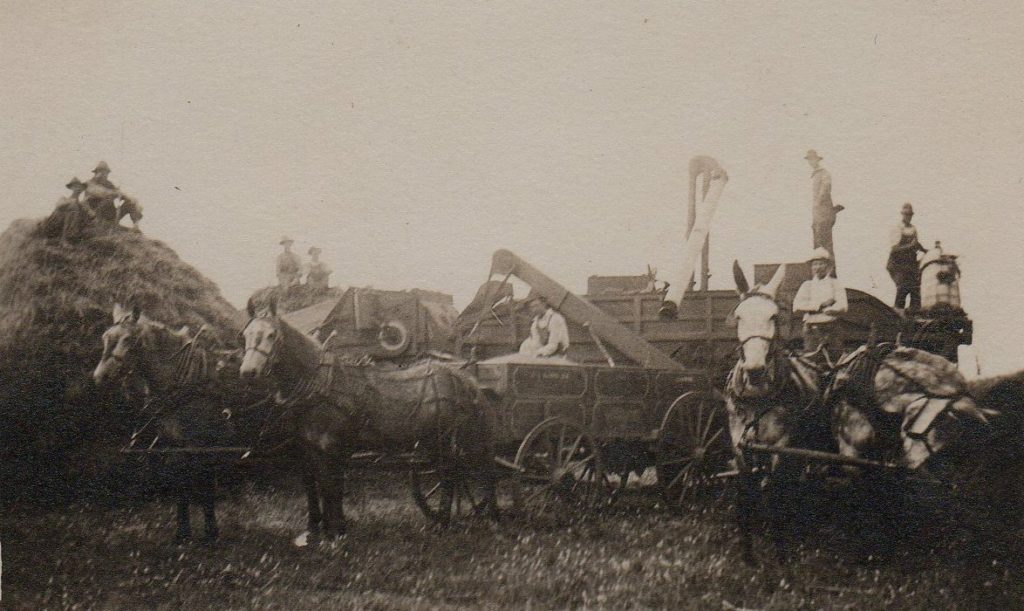
photo courtesy Kearney Museum
My ancestors came to America because this country offered what no other country did – equal opportunity to be the best one could be. No American could be denied the right to own property they had paid for with their sweat, smarts and willingness to take a risk. And boy howdy, did they take a risk.
They entered America through Ellis Island and moved to North Dakota, where winters are long and cold, but the soil is rich and hard work is rewarded with bumper crops and fat livestock. Through wars, mosquitos and depressions, they just worked harder, fixing what was broken with bare hands, ingenuity and maybe some baling wire. There was no supermarket, no Home Depot, certainly no EBT cards or free school lunches. They repaired their own shoes, cut their own hair, and healed their sick cows. They gathered to play polka music on Saturday nights, and danced like there was no tomorrow. And they built a church down the road on their own time with their bare, calloused hands using stones they hauled from their fields.
They enlisted and marched off to defend liberty, laying down their lives for people they did not know because it was the right thing to do.
What would these tough, fearless, independent Americans think of us today?
Tom Balek, Rockin’ On the Right Side
(rough translation) Where the wind wipes our noses, that’s where my first love lives, Where the wind rubs our noses raw, that’s where my first love lives. Even the horses knew how she rode ’em wild, On the farm she wore out every single horse.
In the 1970s we Montanans thought we had it going on, and we snickered about our poor sister state to the east. The “North Dakota Joke” was all the rage back then, and we regaled each other with the latest North Dakota Jokes every morning over coffee. (Did you hear about the power outage at the University of North Dakota library? Thirty students were stuck on the escalator for three hours!)
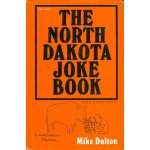
A Great Falls radio jock made the North Dakota joke a staple of his programming and the focal point of his entertainment career. He even published books of North Dakota jokes. I still have one buried somewhere in my stuff. They were the same old jokes that have mocked every sub-group (Polish, Hillbilly, Ole and Lena, etc.) for generations, except now recycled with “North Dakotan” as the subject of derision.
Times have changed. North Dakota now occupies the top rung of the economic ladder, and Montana lags in the bottom quartile. How did that happen? Montana is richer in natural resources, with abundant coal, agricultural land, timber forests, mining, and tourist attractions.
All North Dakota has is some fertile black soil here and there, lots of snow, and the Bakken shale oil and natural gas reserve. But the Bakken extends into eastern Montana, too. And Montana has other proven reserves of shale oil and natural gas. So one still must ask, why is North Dakota doing so well while Montana looks wistfully over the fence?
I have a friend from my adopted Montana hometown who is not well-educated, but is good with his hands and industrious. He is a good mechanic, can weld, and is strong as an ox. But even these attributes are not enough to make a good living for his young family, so like many of his fellow Montanans, he is headed east for work. He said:
“I can make $12,000 a month in North Dakota, with no expenses. Room and board are provided in a man-camp, I work 28 days on and then get 14 days off. Pretty long days, but I get paid weekly and get a bonus just for showing up.”
The difference between the two states? Many would say it comes down to conservative values, work ethic, and plain-old common sense.
Montana changed dramatically over the 23 years from when I left the state for a corporate career to when I came back home to recharge in the beauty and character of the Big Sky. It was a place where miners, loggers, and ranchers worked hard and played hard. They loved the land and put it to good use. An honest, fiercely independent bunch, they had little use for government interference, preferring to solve problems and seize opportunities on their own.
When I returned, some of those people were still here. But I was astonished at the numbers and political reach of environmentalists, government bureaucrats, and zealous newcomers who wanted to recreate our state in the socially-conscious image of California or Washington. “Diversity” and “sustainability” were now the order of the day. As the federal government took a firmer grip on the administration of the state, as outside influence without benefit of Montana history and values grew, and as priorities shifted from creation of wealth to redistribution of it, Montana’s economy slid downhill like springtime snow in the high peaks.
The political conflict in Montana continues, and the Big Sky state will take center stage in the 2014 federal elections. The Obama administration is adamantly opposed to fossil fuel development, and virtually all Democrat officials – state and federal – tend to fall in lock-step. Drilling, fracking, and pipelines are under assault. The leftward lurch in Montana has been not economically favorable over the last few decades, and it remains to be seen if Montanans will stop or reverse the trend.
If not, we may soon be hearing “Montana Jokes” on a Bismarck radio station.
Tom Balek – Rockin’ On the Right Side
Don’t think I’m being funny when I say
You got just what you deserve
I can’t help feeling you found out today
You thought you were too good you had a lot of nerve



 Tom Balek - Rockin' On The Right Side