I Agree With AOC – Stop Bribing Corporations With Our Tax Money

A few weeks ago Amazon decided against putting a new corporate headquarters facility in Queens, New York. Media mega-star freshman congresswoman Alexandria Ocasio-Cortez (D-NY), an outspoken critic of the $2.5 billion tax break being offered, was blamed for the loss of new jobs Amazon promised. Her motivation for opposing the tax incentive was pretty fuzzy.

“If we were willing to give away $3 billion for this deal, we could invest those $3 billion in our district ourselves, if we wanted to. We could hire out more teachers. We can fix our subways. We can put a lot of people to work for that money, if we wanted to,” Ocasio-Cortez said. – FoxNews 2/20/19

AOC, who claims to have a degree in economics, could not grasp the difference between spending existing tax funds and foregoing future tax income.

But I agree with her ultimate aim. I think it’s crazy for cities all over the country to prostitute themselves to the ‘next big thing’ with tax abatement bribes.

It’s not that I believe corporations should pay more taxes, or that reducing taxes is a bad thing. But giving big local tax exemptions to companies who relocate or build new operations just doesn’t make economic sense. Here’s why.

• Local taxes always go up, they never go down. Most of the tax abatements offered to these corporations are reductions in property tax and reduced or free infrastructure cost assessments – streets, utilities, fire stations, etc. All of the costs that were there before the newcomer arrived are still there, plus more. And those costs will be borne by the same local taxpayers who have been footing the bill all along while the new corporation skates.

• Favoring one company over others always screws up the free market. Proponents of tax abatements always justify tax incentives by saying, “If we don’t do it, somebody else will”. So what? Does it harm your city if another city gets a new employer? And are these really new jobs? Isn’t the new company just cherry-picking the good employees already in the local market, leaving their previous employers to find and train new ones? And employees who move to the area for the new jobs will no longer be paying taxes back home, leaving a dent in that economy.

• These deals are often “too good to be true”. It’s not unusual when the new company doesn’t hold up its end of the deal. Promises of thousands of new jobs fall woefully short (FoxConn). Long-term agreements get cut short(Chiquita). And the federal government is no better at corporate welfare than local governments (Solyndra).

My South Carolina county is abuzz this week with word that the Carolina Panthers are considering moving their corporate office and practice facility across the state line to the ‘burbs. Hmm, you don’t suppose they want something in return? And how should Charlotte residents feel after pumping millions of tax dollars into the Panthers’ stadium?

Back in the 80s I was CFO for a locally-owned chain of lumber yards and home centers. My company employed hundreds of good, hard-working taxpaying employees, paid tons of local taxes, and contributed to countless local charities. Then one day the first of the big-box home centers announced it was opening in our city, thanks to a boatload of local tax incentives and up-front benefits. We lost a number of good employees, whom we had trained and nurtured, for a buck or two an hour pay increase. Turns out the new store hired three times as many employees as they intended to keep so they could pick the best of them and dump the rest. They low-balled prices for a few months to entice new customers and then jacked them back up later when nobody was looking. Oh, and yes, the new company was out of business a year and a half into their five-year commitment to the city.

So Congresswoman Alexandria Ocasio-Cortez is actually right. We should not subsidize corporations with public money. When our government picks winners and losers, the taxpayers always seem to be the losers.

Soy un perdedor
I’m a loser baby so why don’t you kill me?
(Get crazy with the Cheeze Whiz)

Loser – Beck (cover by the Cleverlys)

Can We Be From the Same Planet?

Our neighbor, Nancy, stopped my wife for a minute of chit chat and asked what she thinks of the Bret Kavanaugh story.  My better half, never at a loss for words, and always armed with facts, proceeded to educate Nancy on the importance of the presumption of innocence to civilized society.  “Kavanaugh’s accuser has no proof or even information about her ‘assault’ that implicates him,” my wife explained.  “She can’t remember where it happened, when it happened, who was there, how she got there, how she got home – and the few things she does remember have been denied by her own named witnesses.”

Things were getting pretty hot when I happened on the scene.  “You don’t believe he raped all those girls?”  Nancy demanded.   It angered and saddened me that Dr. Ford’s original charge, that 15-year-old Kavanaugh once tried to feel her up over her clothes, has metastasized into a history of violent gang rapes.

“This woman is destroying a man with a brilliant career, along with his wife and daughters, for nothing more than politics,” I said.  “It’s just wrong.”

Nancy did not have – or need – any facts to support her position.  “They should make his daughters testify in front of Congress!” she wailed.  “Are you insane?” my exasperated wife said.  “You want them to ask the girls if their daddy has got drunk and raped them lately?”  Nancy’s comeback: “Well, I just don’t like Kavanaugh.  He’s a liar.  I believe the women.”

With the knowledge that there is no way to reason with a liberal, I grabbed my wife and hurried off to our grandson’s baseball game.

___________________

James popped in to say hi at the local YMCA.  He used to play pickup basketball with us regularly, but we had not seen him for several months.

“I’ve been too busy for hoops,” he told us, which we all agreed is a good thing.  “Make hay while the sun shines,” was my fatherly advice.

James is a young entrepreneur who started an automotive business customizing all-terrain vehicles.  To supplement his income he bought a cargo trailer and makes regional hauls.  “I’m hiring a couple more guys,” he said.  “And I am offering them three times as much money as they are making now.  There is no end to the trucking work available.”

“Business is booming all over,” I noted, and James said, kind of sheepishly, “I know, so why is everybody ragging on Trump?”  A risky statement, because we all know that any defense of Trump in the presence of leftists is an invitation to an ugly scene, and James didn’t know that my basketball buddy and I are also conservatives.  “I can’t see where Trump has done anything wrong.  He is keeping all of his promises and it’s working.  That’s what we needed, a businessman.”

I agreed.  “It’s great to live in America,” I said.  “I hope we can keep it that way.”

James gave us a little personal history.  “I’m from the ghetto,” he said.  “I’m not afraid of poverty, but I don’t like it much either.  And it sure is clear to me that things are lot better now than they have been in a long time.”

“I’ve never been political,” James continued.  “I just never talk about it because everybody gets kind of crazy, and I’m busy working anyway.  But man, this stuff going on with the judge is just ridiculous.”

Tom Balek – Rockin’ On the Right Side

So, round and around and around we go
Where the world’s headed, said nobody knows
Oh, great Googamooga
Can’t you hear me talking to you?

Just a ball of confusion
Oh yeah, that’s what the world is today
Woo, hey, hey

Ball of Confusion – the Temptations


Forget Politics – Think Economics

Politics is too much.  It’s just too big.  So many issues, policies, personalities, feelings, fears, doubts, lies, propaganda.

Everything is hyped and overstated.  The political and cultural divide grows wider and deeper by the day.  In the jumble and tumble of daily politics and market-driven “news” it’s so hard to stay focused on what is real and important.

I don’t know about you, but sometimes for me all of the posturing and gamesmanship gets to be too much – too damned much to digest and bring to any kind of focus or certainty or closure.  Too much grey area and not enough black and white facts. It’s no wonder so many people tune out and continue their lives in blissful disengagement.  I’m not able to do that (you probably aren’t either) and I find myself sometimes needing the “click” of a padlock – the binary knowledge that I know something is right, and imperative, period.

About every ten years or so I come full circle back to what I know in my guts to be true about life, and how we as Americans (and for that matter as human beings on planet Earth)  are wired to make the right choice and do the right thing.   And the path revealed is not political. It always comes back to economics.

To hell with politics.  Every human being on the planet – basket weaver in India, farmer in North Dakota, factory worker in China, soldier in North Korea – has this in common:  we get up every morning and set out to improve the standard of living for ourselves and our families.  Period.

Isn’t this true?  Can you disagree?  We all want a little bit better life for ourselves and the ones we love.  It is a universal truth – a metaphysical fact.  Forget religion.  Forget political party.  Forget culture, education, race, gender, age, nationality.  We all want the same thing.  Better food.  A nicer house.  Less hard labor.  More quality time with our loved ones.

We, the people of the United States of America, have been a beacon of inspiration and righteous success since our nation’s noisy and unconventional birth.  We have improved the standard of living for not only ourselves but also for people all over the world on a quantum scale ever since we became a “thing” in 1776.   We have set the standard.  We are the land of opportunity, the place to be, the bad go-getters and the mean motor-scooters.  We have what it takes.  We know what it’s all about.

Don’t we?  Lately we aren’t so sure.  I mean we did, but do we still?

We Americans have generally credited our political system for our success – our Constitution, our three branches of government with built-in checks and balances, our Bill of Rights, etc.  Great.  It’s all good.  But there’s more to it.

I submit that our American success story is the result of our economic system – free enterprise and free markets, equal opportunity, and minimal government intervention.

Because the truth is:  every human being is ruled by self-interest.

It’s not a bad thing.  We work hard to provide for our families.  We help those in need because we know we may, ourselves, some day need help.  We look for ways to meet the wants and needs of others in the market because that will reward us, as well as them.

Some will say that free markets favor the greedy and unscrupulous.  But America, born a Christian nation, avoided that problem.  We trusted each other.  We were raised to be moral, honest citizens.  We believed in fairness.  Our word was our bond.

As long as America is a Christian nation, and makes decisions based on economic merit, and values honesty, we will be fine.  But we must each shoulder our responsibility.  For every political issue or question we should consider: will this course of action help improve the standard of living for all Americans?  And will it be fair to all Americans?

Anything outside that simple framework just really doesn’t matter.  Try looking at any political issue or question in these terms.  Improved standard of living + fairness/honesty (Christian morality).  The correct path becomes pretty obvious.

Tom Balek – Rockin’ On the Right Side

I’ve got to get it somewhere
I mean, you never know, maybe
You’re dreaming

Too Much – Dave Matthews Band


The always awesome Dave Mathews Band:  it’s just Too Much!  Especially drummer Carter Beauford.

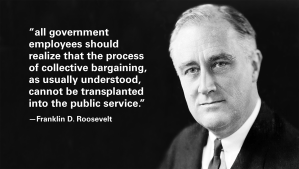
Time to Dump Government Unions

President Trump’s State of the Union speech included a lengthy “to-do” list: infrastructure improvements, workforce development, secure borders and immigration reform, strengthened military, and much more.

One of President Trump’s “to-do” items grabbed my attention, although I have not seen it mentioned anywhere in the press.  Half-way through his epic speech, he said:

All Americans deserve accountability and respect — and that’s what we are giving them. So tonight I call on Congress to empower every cabinet secretary with the authority to reward good workers — and to remove federal employees who undermine the public trust or fail the American People.

I have long pressed for accountability from government employees.  We all know that as the cost of government continues to spiral out of sight, resulting in a $21 trillion debt (and climbing), performance continues to decline.  The federal government hires more and more employees, at ever high wages and benefits that far eclipse comparable jobs in the private sector, with no improvement in results.  Any work done by the federal government will take much longer and cost much more than the same work done outside the Beltway.

The problem is clear, it is huge, and it is easy to solve:  we must eliminate the destructive influence of federal government employee unions.

No business or private organization could survive in an environment where managers can not fire or discipline their employees.  And what employer could afford hiring three people for every job just to get the base amount of work done due to minimum five-week vacations, 21+ days of paid sick leave whether used or not, 12 or more holidays, personal leave, six hour (or less) work days, long lunches, protesting time, travel to exotic locales for meetings, “she’s away from her desk” time, etc.  Government employees are virtually guaranteed over-market salaries, regular raises, bonuses, Cadillac benefits and lifetime employment regardless of performance.   And in many cases the service level to the taxpayers who pay the salaries is disgraceful – witness the abuse of Western landowners at the hands of federal agencies and veterans who die waiting for care at VA hospitals.

Worse yet, the cozy union/Democrat alliance is quid-pro-quo corruption at its worst.  Unions collect gargantuan sums of money to be fed directly to the Democrat party, and federal workers vote overwhelmingly for Democrats, who repay the favor to their benefactors.  It’s so easy to be generous with somebody else’s money.

Of course there are federal government employees who earn their keep, especially in the armed forces and security agencies.  But there are also buildings all across the nation overstuffed with un- or under-productive federal employees and officials who won’t or can’t address the outrageous waste.  Meanwhile, competent and cost-effective individuals and companies who could do the work of the people efficiently can’t break through the bureaucracy.

Now is the time to eliminate the federal government employee unions once and for all.  I call on Congress and the President to relieve this festering sore on the behind of the taxpayers.  Rep. Ralph Norman (R-SC) gets it.  He told me,  “This could be part of federal right-to-work legislation.”

We are tired of being told that federal spending can’t be cut because it’s just too huge to even bother trying.   We demand that our legislators do their jobs, which are setting and administering budgets, appropriating funds, and overseeing agency and department heads.  OMB Director Mick Mulvaney and Labor Secretary Alexander Acosta must step up.  The taxpayers will hold you all accountable as you must hold your federal bureaucrats accountable for efficacious results.

Tom Balek – Rockin’ On the Right Side

I’m proud to a union man
I make those meetings when I can, yeah
I pay my dues ahead of time
When the benefits come I’m last in line, yeah.

Union Man – Neil Young


Trump’s Prerogative – Cut the Red Tape

Trump cuts red tape

ObamaCare has not been repealed or replaced.  As of this writing Tax Reform is stalled.  Planned Parenthood abortions are still being funded with tax dollars and there are no bricks in The Wall.

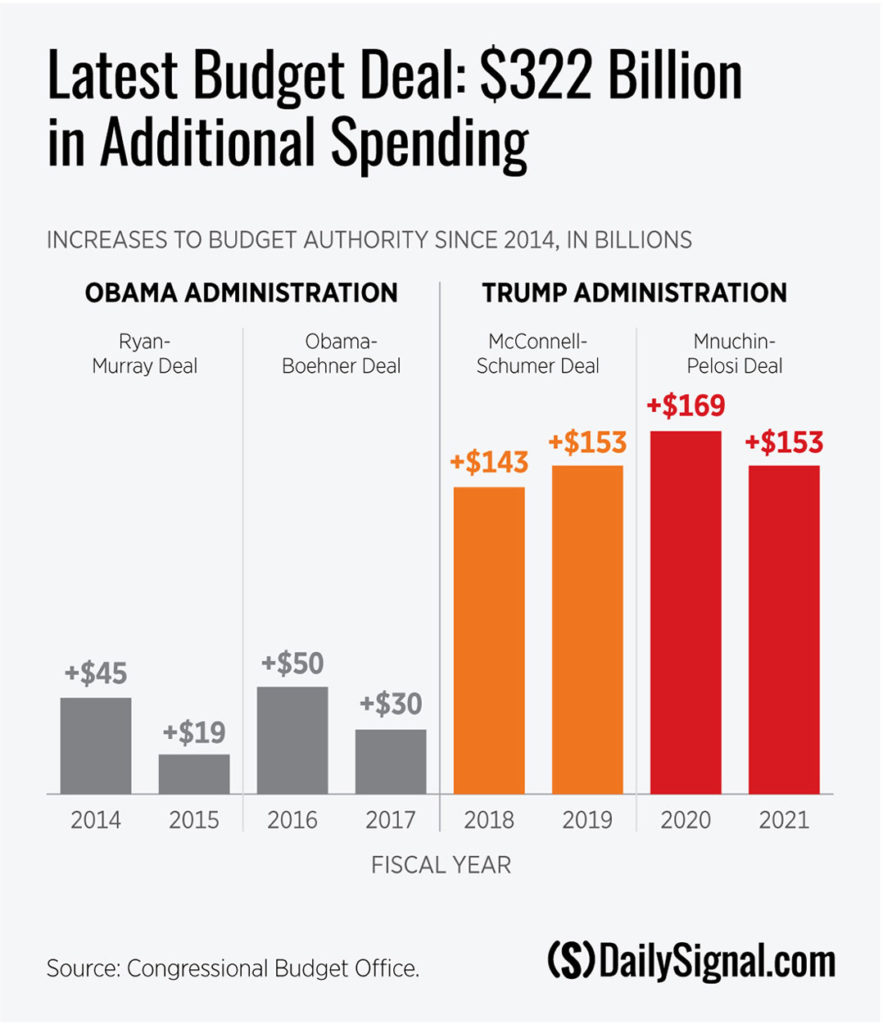
Crooked Hillary escaped without a scratch.  We don’t have a budget and Congress will soon pass yet another bloated continuing resolution to avoid shutting down the government when it busts the debt ceiling.  Again.

Appointments for judicial, state, and agency officials languish on desks as buildings full of holdover Obama appointees and Clinton devotees spend their workdays plotting new coups against the president.

With Republicans holding both houses of Congress and the White House for almost a year now, it appears that conservative voters have little to show for their 2016 trifecta victory at the polls.  But there is a bright spot.  A very bright spot.

While Congress sits on its thumbs, President Trump has used his executive prerogative to cut red tape and waste in the federal bureaucracy.  He threw down the gauntlet last March when his perfectly-chosen budget director Mick Mulvaney announced, “The president’s beholden to nobody but the people who elected him, and yes, I understand that every lawmaker over there has pet projects. That’s the nature of the beast.”   USA Today listed the 62 agencies and programs on Trump’s chopping block at that time, and breathlessly warned that it was the tip of the iceberg.

Last week Trump and Mulvaney thoroughly enjoyed graphically comparing the mountainous volume of regulations in place today versus the small stack of the 1960’s.   The Trump administration has already cut over 1500 regulations and vows to make the “stack” even smaller than it was when the Beatles topped the charts.

“By ending excessive regulations, we are defending democracy, and draining the swamp,” the president declared. “Unchecked regulation undermines our freedoms and zaps our national spirit. It destroys our economy – so many companies are destroyed by regulation. And it destroys jobs.”

Trump is just getting started.  It’s hard work, but long overdue.  His predecessor, Barack Obama, clobbered the US economy with an additional $122 billion dollars of red tape per year, stretching his authority or even flouting the Constitution in the process.

Trump can’t force Congress to do the right thing, or keep its promises.  But as president, it is his prerogative to cut red tape and waste in the agencies under his control.  It’s good news for conservatives.

Tom Balek – Rockin’ On the Right Side

Rockin' On the Right SideEverybody’s talkin’ all this stuff about me
Why don’t they just let me live?
I don’t need permission, make my own decisions
That’s my prerogative!

My Prerogative – Bobby Brown

Coffee Talk on Tax Reform


Some “coffee talk” on tax reform:


Our national debt is now approaching $21 trillion ($231 trillion if you include unfunded liabilities like government pensions), and nobody seems to care.  Most of our congressmen still want to spend more and tax less.  I guess they think we can just print more money whenever we want and there is no down side.  They had better hope interest rates can be artificially held to near zero for generations to come.


Everybody knows the tax code is ridiculously complex.  But few understand what a drag on the economy this complexity causes.  Here’s something to think about:  the cost of filling out government tax forms is estimated by the IRS at $400 billion per year.  At the bottom of every business tax form is a small box that asks how many hours were spent preparing this form.  The preparer will write “2 hours” or “.5 hours” on the form, and the IRS rolls up this number, multiplies it by some arbitrary labor cost per hour, and comes up with $400 billion.  But that’s just for filling out the form!  It doesn’t include the billions of hours spent on accounting to generate the numbers to report on the form!  I know some of this accounting also serves internal purposes, but much of it does not, especially in small businesses.  And we aren’t even counting the cost of the IRS, the IT systems required for data gathering, or the Advils swallowed every April.

I’ll bet the cost of reporting taxes easily exceeds a trillion dollars.  Think about it:  our annual GDP is $20 trillion.  Ask any business owner what percentage of the labor hours in his business are spent punching computers, gathering data and doing accounting.  A conservative average might be 25%.  That would be $5 trillion of bookkeeping per year.  Imagine what our economy could do if we didn’t spend a quarter of our time bean-counting instead of making something useful.


OMB Director Mick Mulvaney knows that there is terrible waste in government, and we could cut a huge chunk out of the federal budget without causing any pain for Americans.  And while he is making the effort to cut spending as best he can, it won’t work.  “Too slow,” says Mulvaney, an honors scholar and holder of advanced degrees in international economics, commerce, and finance.  “The only way to turn the ship around is to grow the economy.”

Mulvaney believes 3% GDP growth, which has been fairly common in our history, would grind down our debt and reduce the drag on the economy, but only only if we could muster some restraint in the growth of spending.  It’s encouraging and discouraging at the same time.  It’s definitely do-able.  But our elected class has learned that they can get elected and re-elected by promising to give everybody somebody else’s money.


The purpose of taxes is to fund the government.  Collecting taxes should be simple:  Here is the budget for next year (say $1 trillion).  Add up the total wages of all adult citizens ($33 trillion).  Divide – the answer is 3%.  Ask each citizen to send a check for 3% of their wages to the swamp.

That might be a little bit too simple – for example, all business and investment profit would need to be distributed as personal income, not retained.  But our tax code has grown to over 75,000 pages, and that’s because it is used for much more than just funding the government.  It’s all about controlling our behavior.  Most tax laws were put in place to reward some of us with tax breaks, or to punish some of us with higher taxes, or to encourage (or require) all of us to act in a certain way.

If you think the government should have less control over your daily life, you should want the tax code to be severely simplified, and the corrupt IRS whittled down to reflect its core mission.


Tom Balek – Rockin’ On the Right Side

It’s Hell! Tryin’ to make it
When you’re doin’ it by yourself
It’s Hell! Payin’ taxes
When there’s no money left

Tax Reform – Time to Get Down On It

Only one group of people likes our tax laws just the way they are:  the accountants.

Our tax code is so complex that nobody understands it.  If you call the IRS ten times to get a question answered, you are likely to get ten different answers – that is, if your call even gets through!  30 million calls went unanswered at last count in 2015.

No two CPAs will ever come up with the same tax liability given the same set of books.  It’s not their fault – the tax code was 75,000 pages a year ago (probably more by now).  And that’s a good thing, if you make your living doing tax returns.  For the rest of us, not so much.

Tax compliance costs almost a half-trillion dollars a year, and that doesn’t include the routine accounting that businesses do every day to determine their profitability. 90% of Americans think the tax code is too complex.

Finally there is an opportunity to do something about it.  GOP members of congress have come up with a tax reform plan that would reduce most individual tax returns to one simple page, eliminate most loopholes and targeted deductions, repeal the complex alternative minimum tax, and do away with business depreciation.

Oh, the humanity!  Tax accountants will be leaping from their first-story windows.  H&R Block will no longer have an office on every block.  Packages of TurboTax software will be relegated to the bargain bin at Ollie’s.  Corrupt and inefficient IRS employees will have to get real jobs that actually produce something of value.

More importantly, GDP growth will suddenly jump from 2.5% to 3%.  Then 4%, and upward. Eliminating the productivity drag of all that accounting, reducing tax payments, and deducting the cost of capital purchases from taxable income will give businesses and individuals a huge shot of economic momentum.

Of course this can only happen if Congress is convinced that voters give a damn.  Most of them would just as soon spend your money for you rather than let you do it yourself, and they enjoy controlling your behavior by controlling your wallet.

It’s way past time for tax reform.  Today might be a good day to pick up the phone and call your member of Congress and tell him or her to get down on it.

Tom Balek – Rockin’ On the Right Side

Get down on it, come on and
Get down on it, if you really want it.
Get down on it, you gotta feel it
Get down on it, get down on it

Get Down On It – Kool and the Gang


They’re getting a little gray, but they still got it going on!  It’s Kool and the Gang.


What’s Wrong With You? Don’t You Care?

I’m glad that many people are generous and caring.  I know that there are some among us who have problems and need help.  I’m happy to help someone in need, like most Americans are.

In fact, statistics show that Americans are more kind and caring to strangers than pretty much any group of people in the world.  When a disaster occurs in any corner of the globe, it is expected that the USA will be there to help pick up the pieces with military, financial, and humanitarian assistance.  And at home we not only support charities, we also provide a safety net of food, housing, medical care and other benefits through our tax dollars.

Generosity was expected of the mostly Christian men and women who founded and developed our nation.  Our pioneers valued hard work and honesty too.  Anyone who took unfair advantage of this generosity was shunned by society.  But as our government and our daily lives became more secular over the years, generosity has come to be viewed as a weakness by the unscrupulous, and the number of reprobates and schemes exploded as government officials learned they can build lucrative careers by giving away other peoples’ money.

We moan about our crushing national debt while politicians claim they can’t cut spending because it is mostly untouchable mandatory “entitlements”.  How naïve or apathetic does one have to be to not see the enormous waste, fraud and abuse in these entitlement programs?

I remember my shock the first time a drug addict offered to sell me food stamps on the street at 50 cents on the dollar.  It had never occurred to me that food stamps could be sold.  Yesterday I was in line at the grocery store behind a veiled Muslim woman and her husband, both dressed to the nines, and venting their displeasure to each other (in Arabic) about the cashier who struggled to separate valid food stamp items from the others.  The wife used her EBT card for the legitimate groceries, and the husband paid for the non-qualifying products with his American Express card.  I didn’t follow them to the parking lot, but I would bet they loaded their groceries into a new luxury car.

One of many problems with ObamaCare is the costly expansion of the Medicaid program to include middle income Americans who can no longer buy health insurance through normal channels.  Concurrent with the failure of ObamaCare is an epidemic of opioid addiction, overdoses, deaths, and the related social costs including unemployment and destroyed families.  Some politicians claim that even more Medicaid spending is required to address the burgeoning opioid problem.  In reality, expanded Medicaid has largely caused the opioid epidemic as millions of people now walk around with unlimited health care credit cards in their pockets and it is only too easy to report aches and pains and ask for opiates which can be easily sold for cash.

Signs appear on the street offering to buy diabetes supplies for cash, next to signs in Spanish advertising tax filing help and promising large refund checks for merely listing dependents.  Education grant checks go to people who never appear on campus.  Couples live together and raise families but never marry because they would risk losing earned income credit and other entitlements.  I could list schemes and scams for the rest of the day and not even scratch the surface.

The Tin Man wanted a heart. The scarecrow wanted a brain.  The cowardly lion wanted some courage.  There’s no reason why we can’t have all three.  We should all care about others, but we have to be smart enough to avoid abuse, and strong enough to say no once in a while.

Tom Balek – Rockin’ on the Right Side

Don’t you see
You’re hurtin’ me
Don’t you care?
Don’t you care?

The Buckinghams – Don’t You Care


We Heard An Inspiring “Make America Great” Speech – by JFK

photo JFK library

Over dinner, my wife and I watched the news about President Trump’s latest “Make America Great Again” rally, delivered to a stadium full of supportive Americans.  It was filled with populist promises and ideas  and peppered with a healthy dose of partisan vitriol.

We wondered who was the last president to barnstorm the country talking directly to the folks.  Simultaneously we both remembered attending John F. Kennedy’s historic speech in Great Falls, Montana in 1963, only two months before he was assassinated.

We were both in fifth grade, living in different towns, and wouldn’t meet until several years later.  But like everyone else in the area we both found our way to the high school football stadium to hear our president talk.  It’s not every day that you get a chance to see a president when you live in Montana.  Our teachers had prepared us for the moment, and we were old enough to understand every word of JFK’s speech.  We both remember being impressed not only by the celebrity of it all, but also the uplifting message.

Over the years we had forgotten exactly what Kennedy talked about, so I looked for his speech on the web, finding it at the American Presidency Project website.

Reading the speech aloud, we felt again some of the same inspiration at Kennedy’s words that we did 53  years ago.  In some ways we were even more inspired, knowing the depths of political depravity to which our nation has sunk in recent years.  Kennedy’s cold war rhetoric now seems naive and archaic, but national security was as vexing to Americans then as the spread of radical Islamic terrorism is today.

Back then the throngs of Montanans who clamored to hear Kennedy didn’t care about his party affiliation.  He was our president.  He belonged to all of us, and spoke to all of us – directly and respectfully.  Rather than dividing us into groups pitted against each other, JFK encouraged Americans to recognize and enjoy the benefits of living in the greatest nation in the world.

He spoke of growing our economy through use and development of our vast natural resources.  Back then Montana was an economic powerhouse with mining, forestry, agriculture and hydroelectric power promising a bright future for generations to come.  And Kennedy advocated for better education and technology.

Kennedy was firm in his resolve to maintain America’s status as the active leader of the free world; a beacon for democracy, peace and economic progress.  He asked for our understanding, our effort, and our trust.  He expected us, as a nation and as individuals, to be responsible.  JFK made mistakes, and had character flaws, but his concern for all of his countrymen, and his understanding of our shared values were never questioned.

Kennedy’s assassination was shocking to a nation of people who had coalesced in support of his agenda.  While the true motivation behind his murder may never be revealed to the public, it is accepted that it was a political act.

In today’s political reality, nearly half of our citizens subscribe to a regimen of hostility, obstruction and resistance to President Trump’s every thought and word.  His personal threat level is off the charts compared to Kennedy’s.

Please read the text (below) of President John Kennedy’s speech and see why it was easy for Americans to be united and be proud of our country in 1963.



Remarks at Great Falls High School Memorial Stadium – September 23, 1963

Senator Mansfield, Governor, Secretary Udall, Senator Metcalf, Madam Mayor, Congressman Olsen, ladies and gentlemen:

This journey, which started almost by accident, has been one of the most impressive experiences of my life. We live in the city of Washington, in a rather artificial atmosphere. Washington was deliberately developed as a Government city in order to remove those who were making the laws from all the pressures of everyday life, and so we live far away.

We talk about the United States, about its problems, its powers, its people, its opportunity, its dangers, its hazards, but we are still talking about life in a somewhat removed way. But to fly, as we have flown, in the short space of 48 hours, from Milford, Pennsylvania, to Ashland, Wisconsin, to Duluth, Minnesota, to North Dakota, to Wyoming, to Montana, back to Wyoming, back to Montana, and then to go to the State of Washington and the State of Utah this evening, shows anyone who makes that journey even in a short period of time what a strong, powerful, and resourceful country this is.

Montana is a long way from Washington, and it is a long way from the Soviet Union, and it is 10,000 miles from Laos. But this particular State, because it has, among other reasons, concentrated within its borders some of the most powerful nuclear missile systems in the world, must be conscious of every danger and must be conscious of how close Montana lives to the firing line which divides the Communist world. We are many thousands of miles from the Soviet Union, but this State, in a very real sense, is only 30 minutes away.

The object of our policy, therefore, must be to protect the United States, to make sure that those over 100 Minuteman missiles which ring this city and this State remain where they are, and that is the object of the foreign policy of the United States under this administration, under the previous administration, and under that of President Truman. One central theme has run through the foreign policy of the United States, and that is, in a dangerous and changing world it is essential that the 180 million people of the United States throw their weight into the balance in every struggle, in every country on the side of freedom. And so in the last years we have been intimately involved with affairs of countries of which we never heard 20 years ago, but which now affect the balance of power in the world and, therefore, the security of the United States and, therefore, the chances of war and peace.

I know that there are many of you who sit here and wonder what it is that causes the United States to go so far away, that causes you to wonder why so many of your sons should be stationed so far away from our own territory, who wonder why it is since 1945 that the United States has assisted so many countries. You must wonder when it is all going to end and when we can come back home. Well, it isn’t going to end, and this generation of Americans has to make up its mind for our security and for our peace, because what happens in Europe or Latin America or Africa or Asia directly affects the security of the people who live in this city, and particularly those who are coming after.

I make no apologies for the effort that we make to assist these other countries to maintain their freedom, because I know full well that every time a country, regardless of how far away it may be from our own borders-every time that country passes behind the Iron Curtain the security of the United States is thereby endangered. So all those who suggest we withdraw, all those who suggest we should no longer ship our surplus food abroad or assist other countries, I could not disagree with them more. This country is stronger now than it has ever been. Our chances for peace are stronger than they have been in years. The nuclear test ban which was strongly led in the Senate of the United States by Mike Mansfield and Lee Metcalf is, I believe, a step toward peace and a step toward security, and gives us an additional chance that all of the weapons of Montana will never be fired. That is the object of our policy.

So we need your support. These are complicated problems which face a citizenry. Most of us grew up in a relative period of isolation, and neutrality, and unalignment which was our policy from the time of George Washington to the Second World War, and suddenly, in an act almost unknown in the history of the world, we were shoved onto the center of the stage. We are the keystone in the arch of freedom. If the United States were to falter, the whole world, in my opinion, would inevitably begin to move toward the Communist bloc.

It is the United States, this country, your country, which in 15 to 18 years has almost singlehandedly protected the freedom of dozens of countries who, in turn, by being free, protect our freedom. So when you ask why are we in Laos, or Viet-Nam, or the Congo, or why do we support the Alliance for Progress in Latin America, we do so because we believe that our freedom is tied up with theirs, and if we can develop a world in which all the countries are free, then the threat to the security of the United States is lessened. So we have to stay at it. We must not be fatigued.

I do not believe that the test ban treaty means that the competition between the Communist system and ourselves will end. What we hope is that it will not be carried into the sphere of nuclear war. But the competition will go on. Which society is the most productive? Which society educates its children better? Which society maintains a higher rate of economic growth? Which society produces more cultural and intellectual stimulus? Which society, in other words, is the happier?

We believe that ours is, but we should not fool ourselves if the chance of war disappears to some degree.

Other struggles come to the center of the stage. The solution of every problem brings with it other problems. And, therefore, this society of ours is, in a very real sense, in a race, and, therefore, I want to see all of our children as well educated as possible. I want to see us protect our natural resources. I want to see us make our cities better places in which to live. I want this country, as I know you do, to be an ornament to the cause of freedom all around the globe, because as we go, so goes the cause of freedom. This is the obligation, therefore, of this generation of Americans. And I think that in the last 18 years, reviewing what we have done, we have every reason to feel a sense of satisfaction, and I look forward to the next decade when the struggle may be in all these other areas. I look forward to that struggle with confidence and hope. But we must recognize the national obligation upon us all. There are 8 to 9 million children in the United States of America in high school or in elementary school who live in families which have $3,000 a year or less. What chance do they have to finish high school? How many of them will go to college? What kind of an income will they have when they go to work? Will their children then grow up in a family which is, itself, deprived and so pass on from generation to generation a lag, a fifth of the country which lives near the bottom while the rest of the country booms and prospers?

It is the obligation of government, speaking on the will of the people, that we concern ourselves with this phase of our resource development, our children, 9 million children who are growing up without the opportunity available to yours. And then they drop out of school, and then they lose their chance. So we have a lot to do in this country. We have a lot to do. And I am out here to try to get your support in doing it.

One of the things that I think we have to do is worry about this country of ours. I flew over some of the most beautiful parts of the United States this morning from Jackson Hole. I am sure that half of our country, particularly those who live east of the Mississippi River, have no idea what we have in this part of the United States. They are beginning to realize it, and more and more. But all in the east of the Mississippi live too much in crowded areas. They live along the seashore, which is open to only a few. They live in cities which are becoming more sprawling and more concentrated. And we have here in the Western United States a section of the world richer by far almost than any other. I want them to come out here. And I want the United States to take those measures in this decade which will make the Northwest United States a garden to attract people from all over this country and all over the world.

We go to Jackson Hole and Yellowstone and we are impressed, as all of us are. But what we should remember is that that was due to the work of others, not to us, but to those who made the great fight in the last 50 years. Now in the 1960’s we have to decide what we are going to do, and I believe that there is a good deal that we can do. We have started on a project, a concentrated project of resource development. More watershed projects have been completed in recent years than ever before in our history. Negotiations are underway which should lead, and must lead, to the final ratification of the Columbia River treaty with Canada. It has moved into its last stages, and it is my hope that work will soon be commenced on the Libby Dam project in northwest Montana, which will make this a richer State in which to live. And what you have done here in this section of the United States, I want us to do along our coastline. Only 2 percent of our extraordinary coastline, the Atlantic, the Gulfstream, and the Pacific, only 2 percent is devoted to public use. We have the same fight along our coastlines that we had here in this section of the Northwest 30 and 40 years ago for forests and parks and all the rest–2 percent.

The fact of the matter is, we passed in one year in 1961 three parks along our seashores which is more than had been done in 1 year in any Congress in history. We have let our seashores go to waste.

So I urge this generation of Americans, who are the fathers and mothers of 350 million Americans who will live in this country in the year 2000, and I want those Americans who live here in 2000 to feel that those of us who had positions of responsibility in the sixties did our part, and those of us who inherited it from Franklin Roosevelt and Theodore Roosevelt will have something to pass on to those who come, and our children, many years from now.

So I hope that we will harness our rivers. I hope we will reclaim our land. I hope we will irrigate it. I hope we can provide, through cooperative effort of the farmers and the Government, the kind of program which will give them a hope for security. I hope, in other words, that we will take this rich country of ours, given to us by God and by nature, and improve it through science and find new uses for our natural resources, to make it possible for us to sustain in this country a steadily increasing standard of living, the highest in the world, and, based on that powerful fortress, to move out around the world in the defense of freedom, as we have done for 18 years and as we must do in the years to come.

This is the responsibility which this generation of Americans has been given. I do not share with those who feel that this responsibility should be passed on to others. The fact of the matter is that there are no others who can combine our geographic position, our natural wealth, and the determination of our people. And, therefore, until such a people someday arrives, I think the United States should stand guard at the gate. The fact is, we have done it for 18 years. The fact is, the chances for peace may be better now than before. The fact is that our wealth has increased. The fact is, there are over 100 countries which are now independent, many of them who owe their independence to the United States.

This is the record which this country has written since 1945, and it is upon this great record that I believe we now must build. This sun and this sky which shines over Montana can be, I believe, the kind of inspiration to us all to recognize what a great single country we have, 50 separate States, but one people, living here in the United States, building this country and maintaining the watch around the globe.

This is the opportunity before us as well as the responsibility.
Thank you.


Tom Balek – Rockin’ on the Right Side

Cut the Budget, Or A Whole Department? You Decide!

When is the last time the Federal Government asked you what you want it to do?  Been a while, hasn’t it?

Here is yet another example of how elections really do matter.  The Trump administration, via Mick Mulvaney and his Office of Management and Budget, wants your input.

They set up a web page on the White House website and are asking for suggestions from citizens on how to make our federal government “more efficient, effective, and accountable to the American public.”

They want you to name names.  They are asking for details.  If you have seen a federal agency that is not operating at, shall we say, “peak efficiency”, here’s your chance to do something about it.  Trump and Mulvaney want to know which agencies, boards, and commissions are screwing up, wasting money, or are no longer even necessary, and visitors to the website are encouraged to share their ideas and solutions in detail.

In addition, citizens are asked to weigh in on federal government management reform and reorganization of the government.  How damn refreshing is that?

It’s hard to resist the temptation to “select all” for elimination or reform and hit enter.  So I zeroed in on all the departments and agencies related to the Indian Reservation debacle.

Rumor has it that Mulvaney and his team are also planning to “tech up” the government to modern business standards, something I have advocated for years.

Information technology (IT) advancements have been at the center of a transformation in how the private sector operates—and revolutionized the efficiency, convenience, and effectiveness with which it serves its customers. The Federal Government largely has missed out on that transformation due to poor management of technology investments, with IT projects too often costing hundreds of millions of dollars more than they should, taking years longer than necessary to deploy, and delivering technologies that are obsolete by the time they are completed. We are working to close the resulting gap between the best performing private sector organizations and the federal government.

— Office of E-Government and Information Technology

Of course asking for input and actually using it are two very different things.  But I find it flattering to even be asked, after two terms of total arrogance in the executive office.

So I hope you will take a few minutes and look over the long list of agencies.  Consider whether the National Endowment for the Arts is still deserving of taxpayer support, and check yes or no.

Tom Balek – Rockin’ On the Right Side

Do you love me,
Do you want to be my friend?
And if you do
Well then don’t be afraid to take me by the hand
If you want to
I think this is how love goes
Check yes or no

Check Yes or No – George Strait